Mental Compulsions: The Invisible OCD Symptoms Draining You
Sep 30, 2026
You're exhausted. Not physically tired. Your brain woke up already running — through rumination, trying to figure things out, trying to solve things that haven't even happened yet. By the end of the day, you haven't gotten any closer to where you wanted to be.
Here's what's happening, how to catch yourself doing it, and what to do instead.
START HERE
The Two-Column Exercise
When overwhelm hits, grab a piece of paper and write down everything weighing on you — intrusive thoughts, worries, tasks, fears. Everything. Then grab another piece of paper and draw a line down the middle.
- ✓ Left column — things you have control over. Make the call. Send the text. Do the task. Take care of it.
- ✓ Right column — things you don't control. This is where things get handled completely differently. And what you're currently doing with the right column items is probably making things worse.
When something lands in the no-control column, your brain says: if I analyze it enough, maybe I can move it to the other side. So it doesn't stop. That's the mental compulsion.
What Mental Compulsions Actually Look Like
OCD compulsions aren't always visible. Some of the most draining ones are completely invisible — all in your head. Here's what they look like:
- ✓ Rumination — going over the same worry over and over, replaying conversations that never got resolved, looking at old journal entries to understand who you are as a person
- ✓ Mental reviewing — replaying a conversation or decision over and over trying to find what went wrong
- ✓ Mental reassurance — telling yourself "it'll be fine, it'll be fine, don't worry." Feels like positive thinking. Actually feeds the loop.
- ✓ Feeling checking — am I anxious? How anxious? Am I getting better? Is this normal? Does everyone have this? Is it ever going to go away?
Ask yourself: am I moving toward a solution, or am I going in circles? Real problem solving moves you forward — you think about something, take an action, and move on. A mental compulsion gives you the same thought over and over with no resolution.
FOR OCD-RELATED WORRIES
ERP for Mental Compulsions
If the worry is OCD-related — intrusive thoughts, harm, contamination, morality, health, relationships — use ERP. Notice the urge to ruminate and don't do it. Don't engage with the content of the worry. Don't argue with it. Don't try to solve it. Let it sit there unresolved and practice tolerating it.
Your brain will scream: this is important. It belongs on the left side of the paper. What if this time it's real? It's going to feel wrong not to treat it as something you need to take care of.
Phrases to use while you're sitting with it: maybe, maybe not. It can pester me as long as it wants. Maybe I need to take care of it, maybe I don't. I guess anything's possible. And you go back to your life, even if the thoughts are still there.
Example: Worried about a parasite in the lettuce. You've researched, you know it's not contagious, but what if they're wrong? You shook people's hands. Your kid hugged you. There's no certain answer yet — you have to wait. Instead of suffering through the wait, do an exposure: go hug your kid again. Shake everyone's hand at work. Touch the door handles. Use phrases: "Maybe I'm spreading this thing. Maybe not. Hope so. That would be amazing." You're moving toward the fear instead of away from it.
You're not just saying phrases — you need something actionable. What can you touch, see, think, or engage with that faces this fear just a little bit more? Find that and do it.
FOR NON-OCD WORRIES
Regular Life Stuff Gets a Different Approach
Not everything in the right column is OCD. Some of it is just real life — things you genuinely don't know the outcome of yet. That gets handled differently.
Notice the worry. Don't follow it into the spiral. Bring yourself back to right now. Then ask: is there anything I can actually do right now? If the answer is no, that might be your answer.
For non-OCD worries, you can challenge the thought more directly: what would I tell a friend who came to me with this same worry? Could I prove this thought is true if I were standing in front of a judge? What's the actual evidence? What are the alternative explanations?
Even for regular life worries, it often comes back to maybe maybe not. Maybe my boss is upset about that comment. Maybe not. Maybe he just wants to talk. I don't know. And then: what can I do right now? I'm cooking dinner. That's what I'm doing.
The Thought on Paper Looks Different
Sometimes just getting your thoughts on paper creates clarity. When you write "I'm spreading a parasite to everybody" and look at it, it can look different than it did in your head. The brain amplifies. Paper doesn't.
The next time a thought won't stop — write it down. Write the thought. Write "maybe, maybe not" next to it. The next one. Maybe, maybe not. Do it for every one. Sometimes that's enough to break the loop.
This overwhelm doesn't last forever. You face it now and it's hard, but it gets better way faster than you think. What doesn't get better is researching, avoiding, analyzing, and still not feeling better at the end of it all. The Master Your OCD course has 67 videos specifically on mental compulsions, rumination, and how to build exposures for all of it. You can try it free.

Nathan Peterson, LCSW — Licensed therapist specializing in OCD, anxiety, and related conditions. Nathan has helped thousands of people through evidence-based treatment and education.
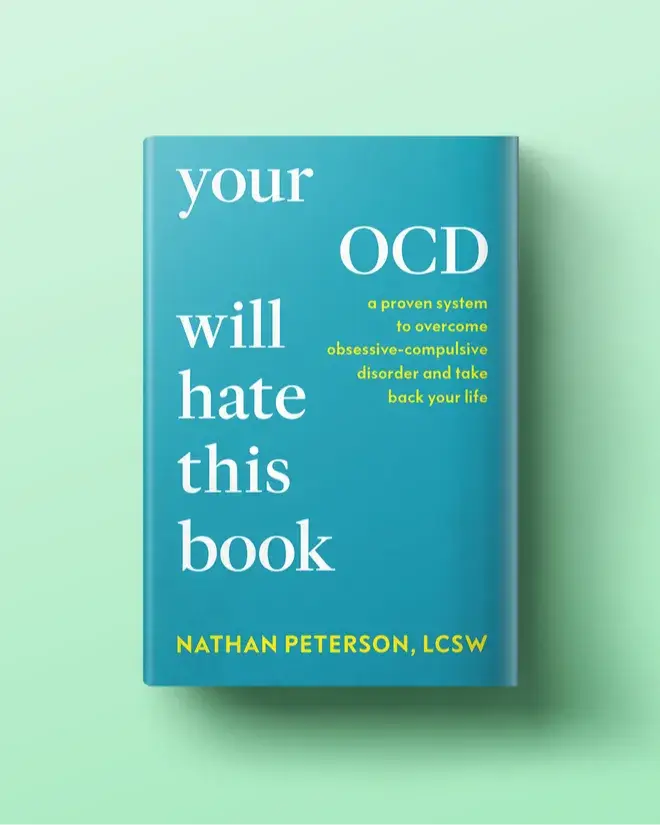
LCSW Licensed Therapist | 10,000+ Course Students | 24M+ YouTube Views | Penguin Random House Author
 |
Stop the mental loops for goodMaster Your OCD covers mental compulsions, rumination, ERP for invisible compulsions, and every OCD theme — with worksheets and 67 step-by-step videos.
|
Author