Nathan Peterson, LCSW
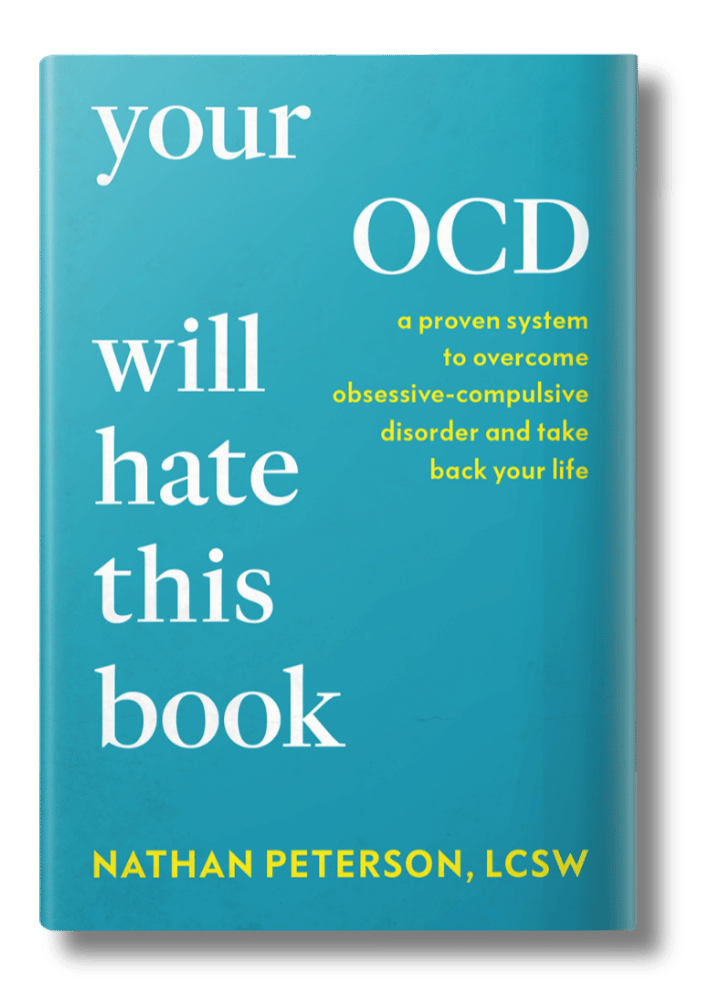
Your OCD will hate this book.
Exposure and Response Prevention, start to finish, written the way I explain it on YouTube. Worksheets come with it, so you're not guessing what to do next.
“You will not need another book on OCD after this one.”
Patrick McGrath, PhD · Chief Clinical Officer, NOCD
Most OCD books explain OCD. Then you close them and still don't know what to do tomorrow.
You know the cycle already. The thought shows up, you check, and it goes quiet for a minute before it comes back louder. One more explanation of that won't get you out of it.
This book takes you through it in the same order I would. What OCD wants from you, which compulsion to drop first, what to put on your exposure plan, and what to do when the anxiety hits hard.
And yes, no compulsions. Easy right? That's why the chapters hand you worksheets instead of a pep talk.
Inside the book
How it's put together.
One path, session one to graduation
You start at the front and keep going. Each part tells you what to do next and how to tell when you're ready to move on, so you're not picking coping skills off a list and hoping.
16 worksheets you fill in
Your core fear, your exposure plan, your response plan. Scan the code in the chapter, then fill it in on your phone or computer, or print it if you'd rather write by hand.
Follow Sarah through the whole process
Sarah is a fictional character. Her OCD runs through every chapter, so you can see what each step looks like for your own stuff.
The chapters
Sixteen chapters, in the order you'd do them.
You read it front to back the first time. After that it works as a reference for whichever part of treatment you're in.
Included with the book
The worksheets that do the work.
Scan the code and the worksheet opens on your phone. Fill it in there or on your computer, or print it if you'd rather write by hand.
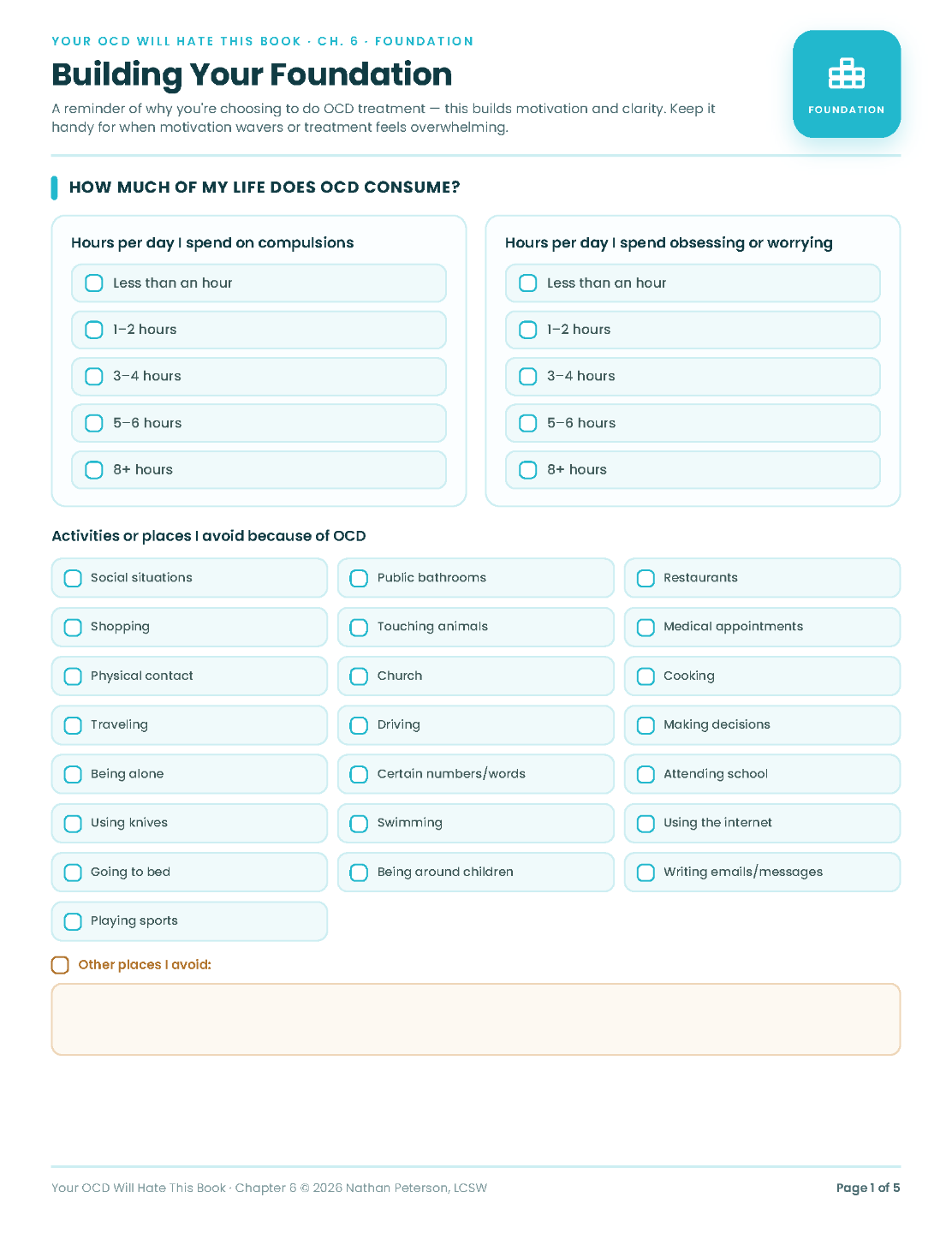
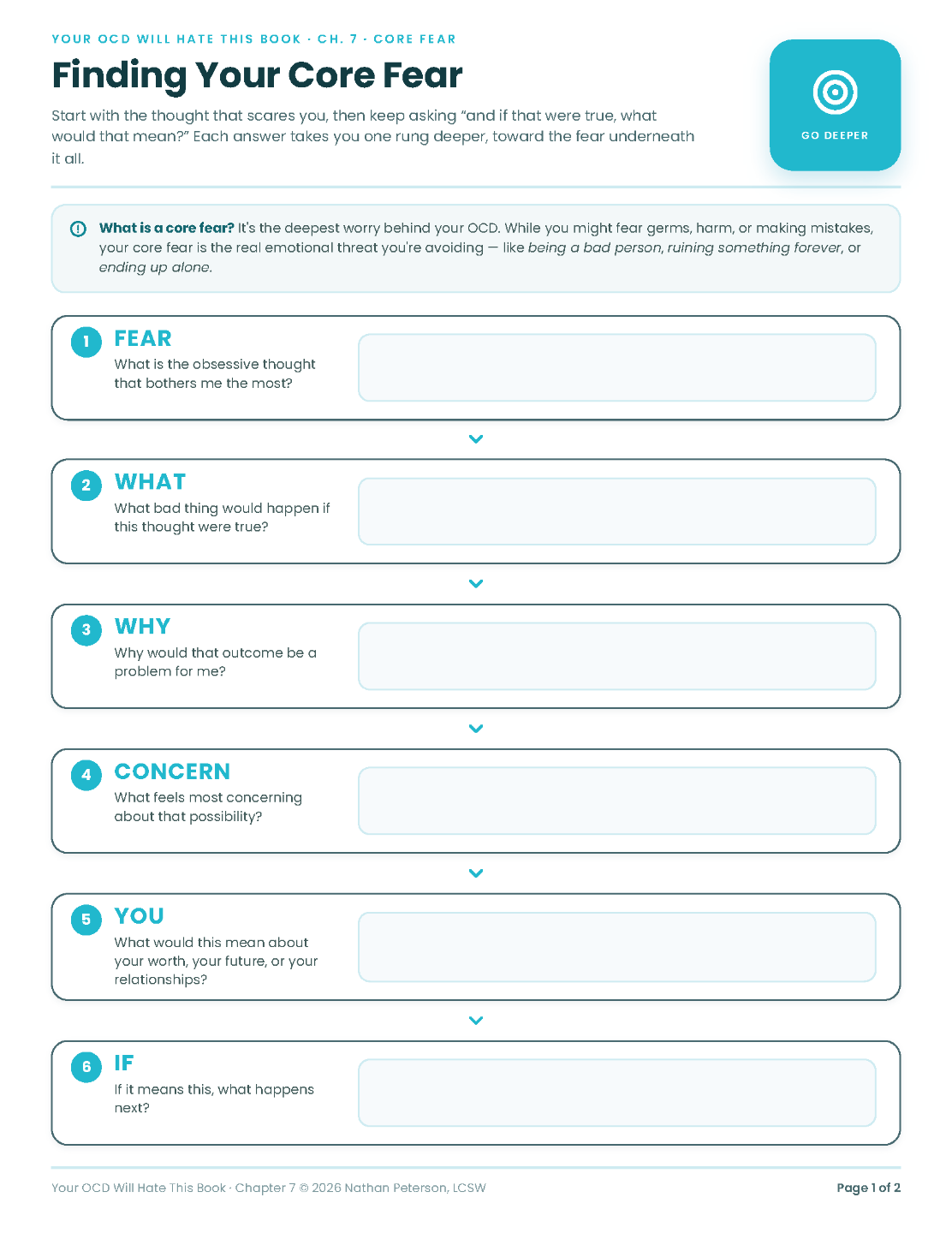
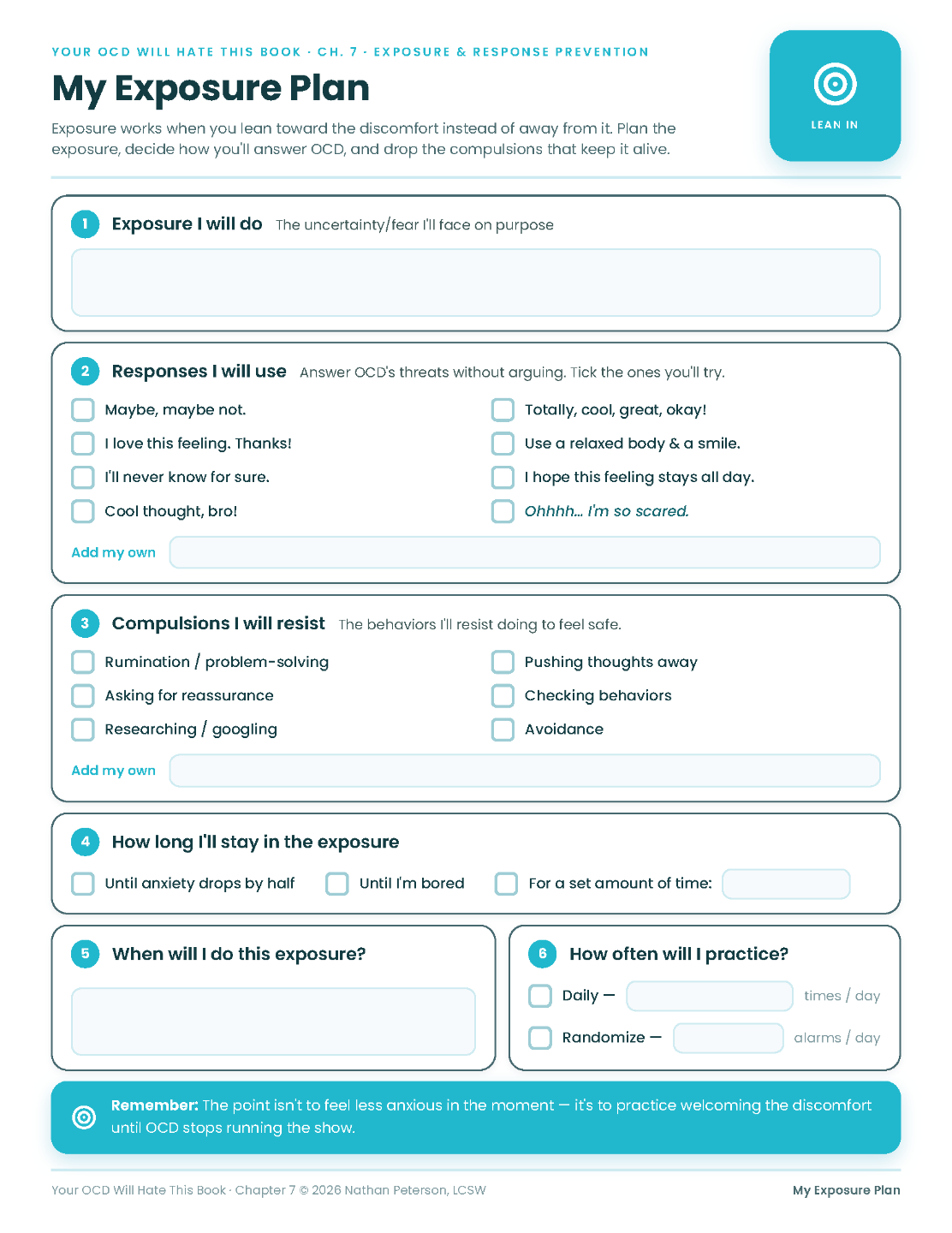
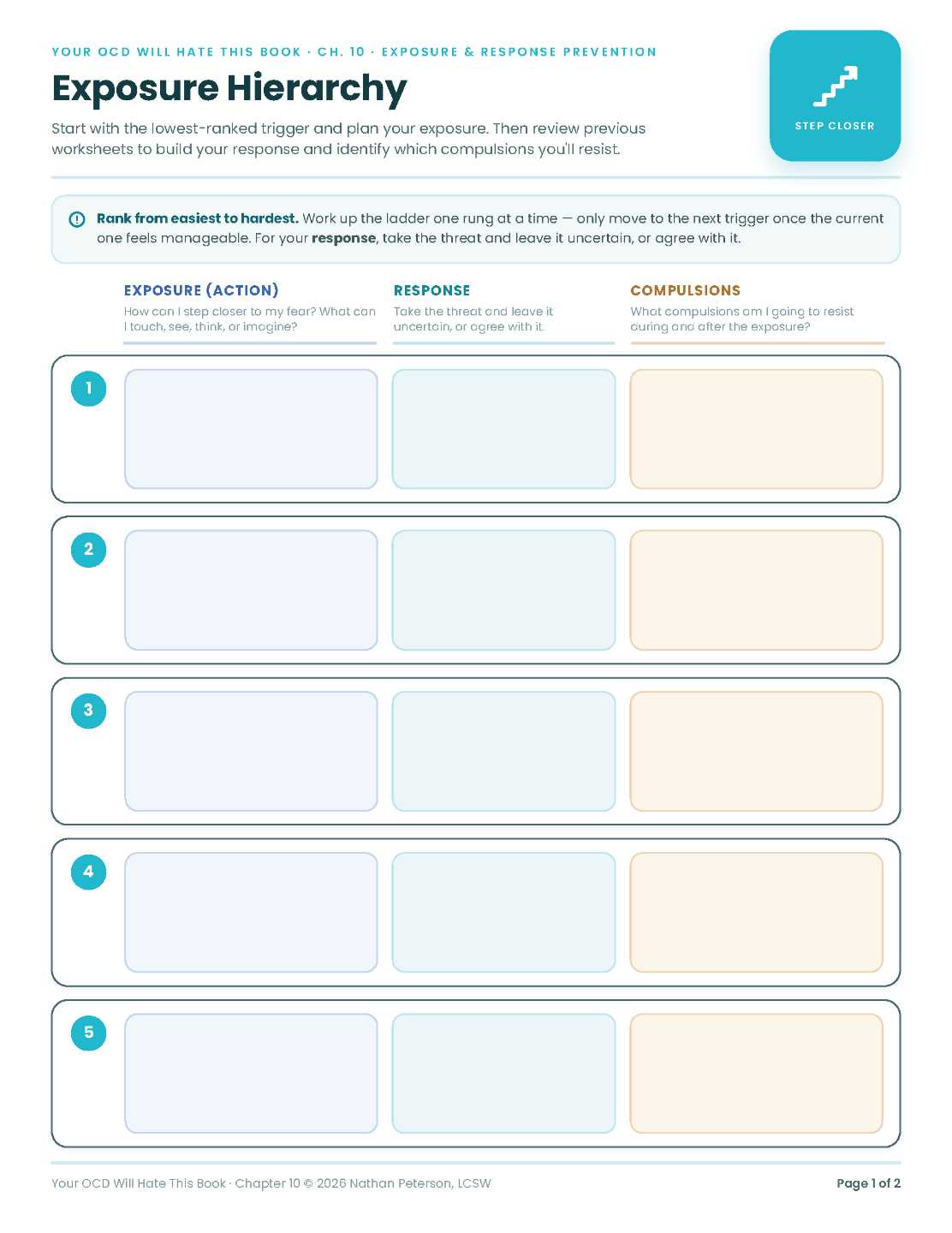
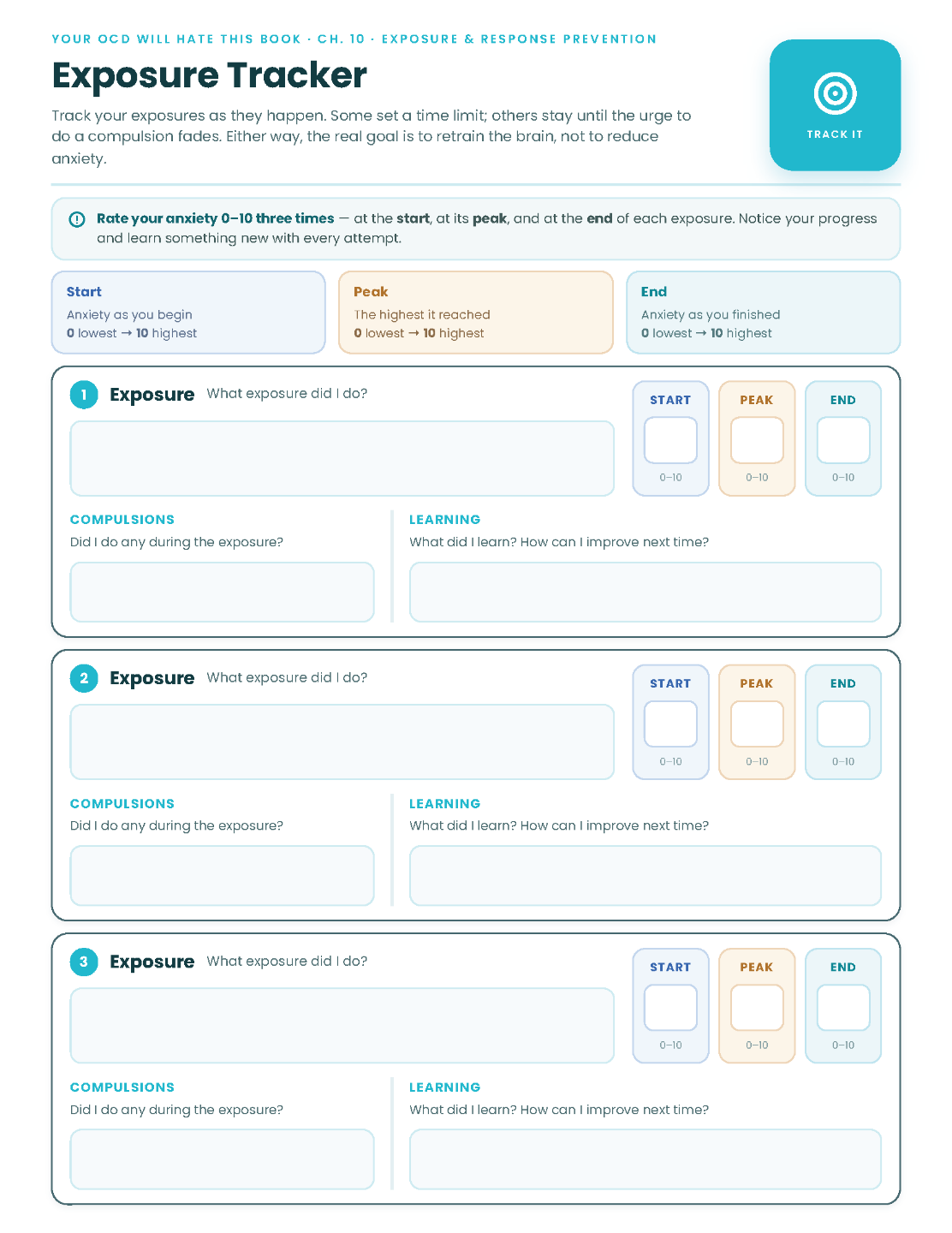
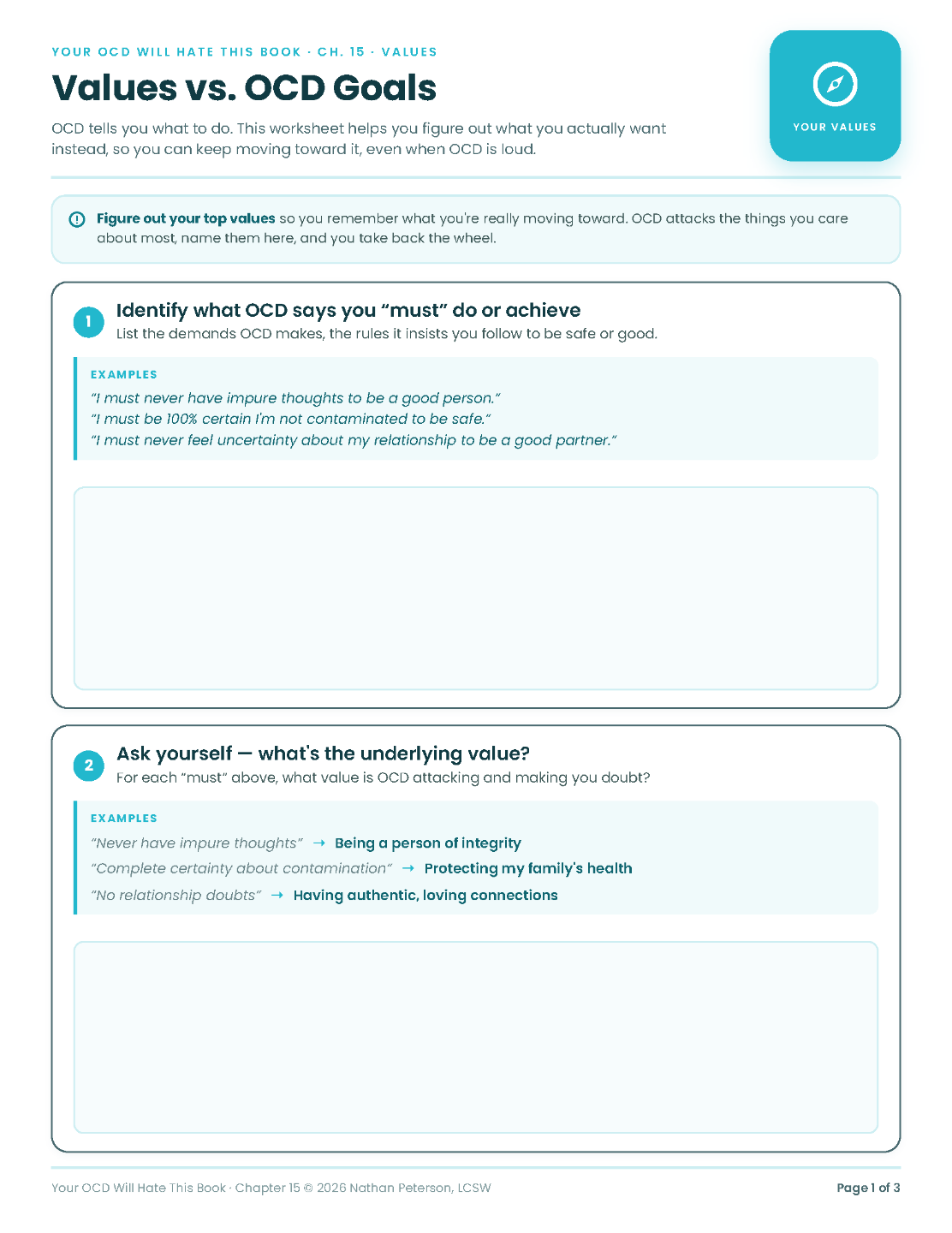
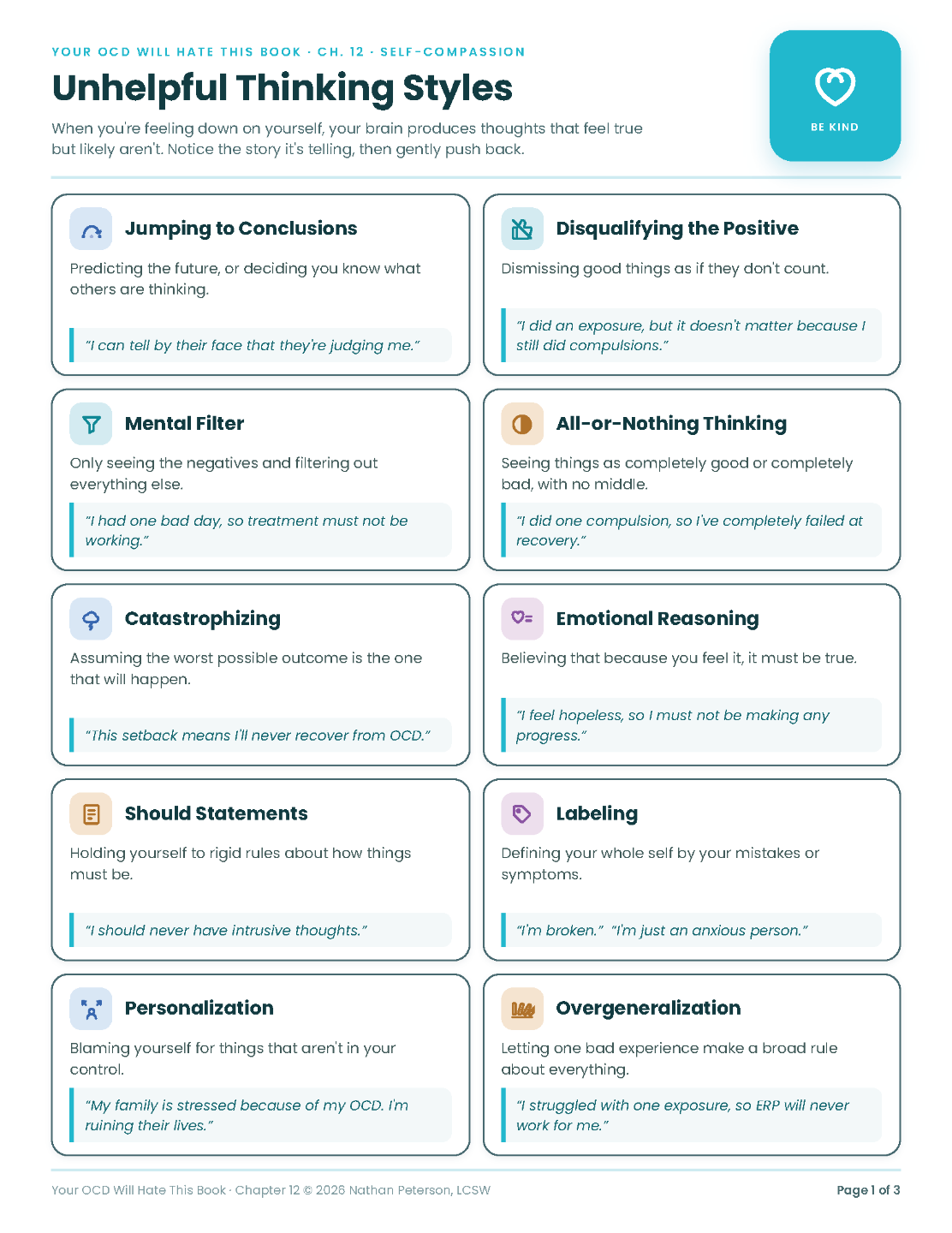
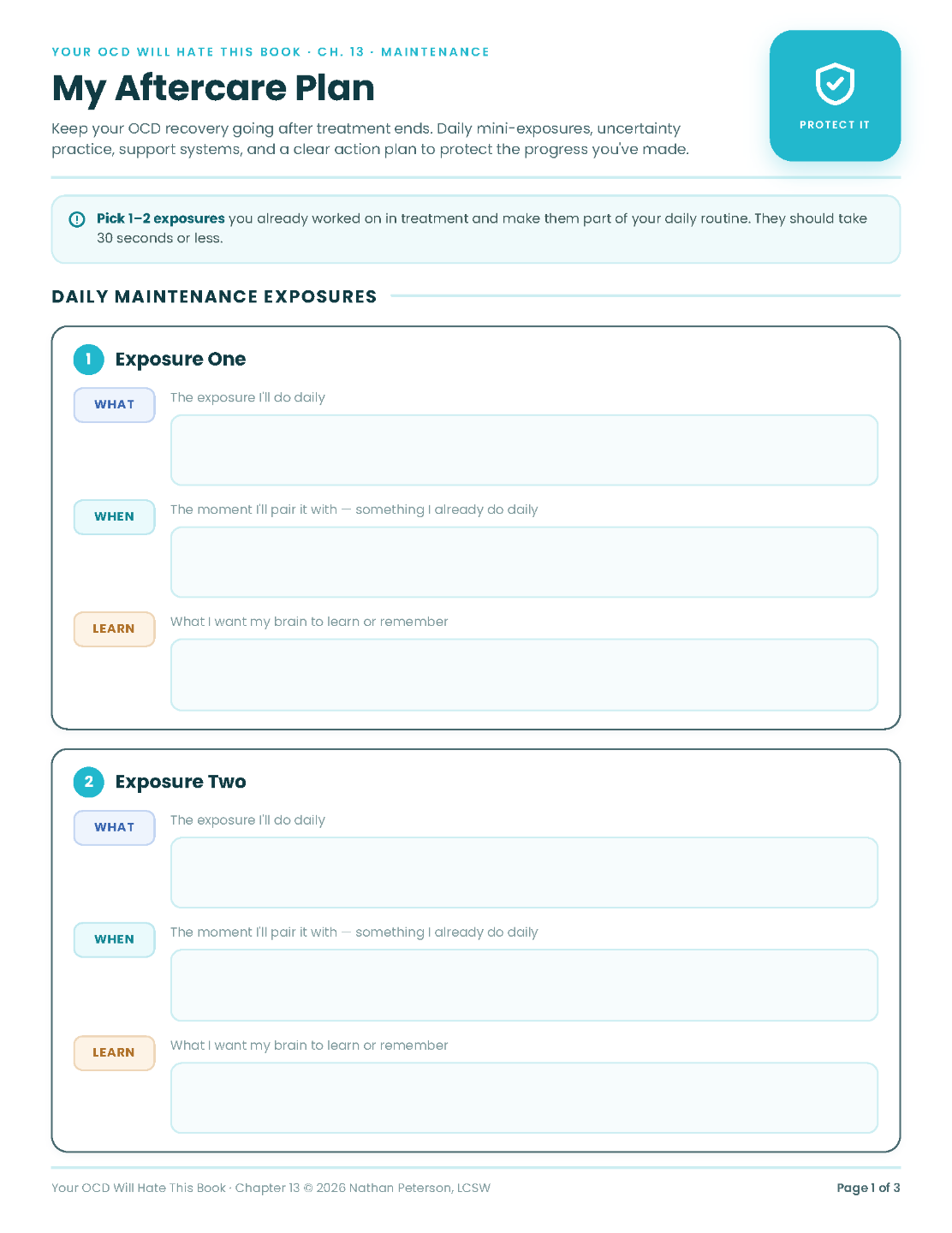
16 worksheets, reachable by QR code from inside the book.
Get the bookPraise
What other OCD specialists said.
“Cracks the self-help code.”
Coauthor, The Mindfulness Workbook for OCD
“Bold, clear, and deeply practical.”
Host, Your Anxiety Toolkit
Amazon reviews
5.0 stars, and the reviews say why.
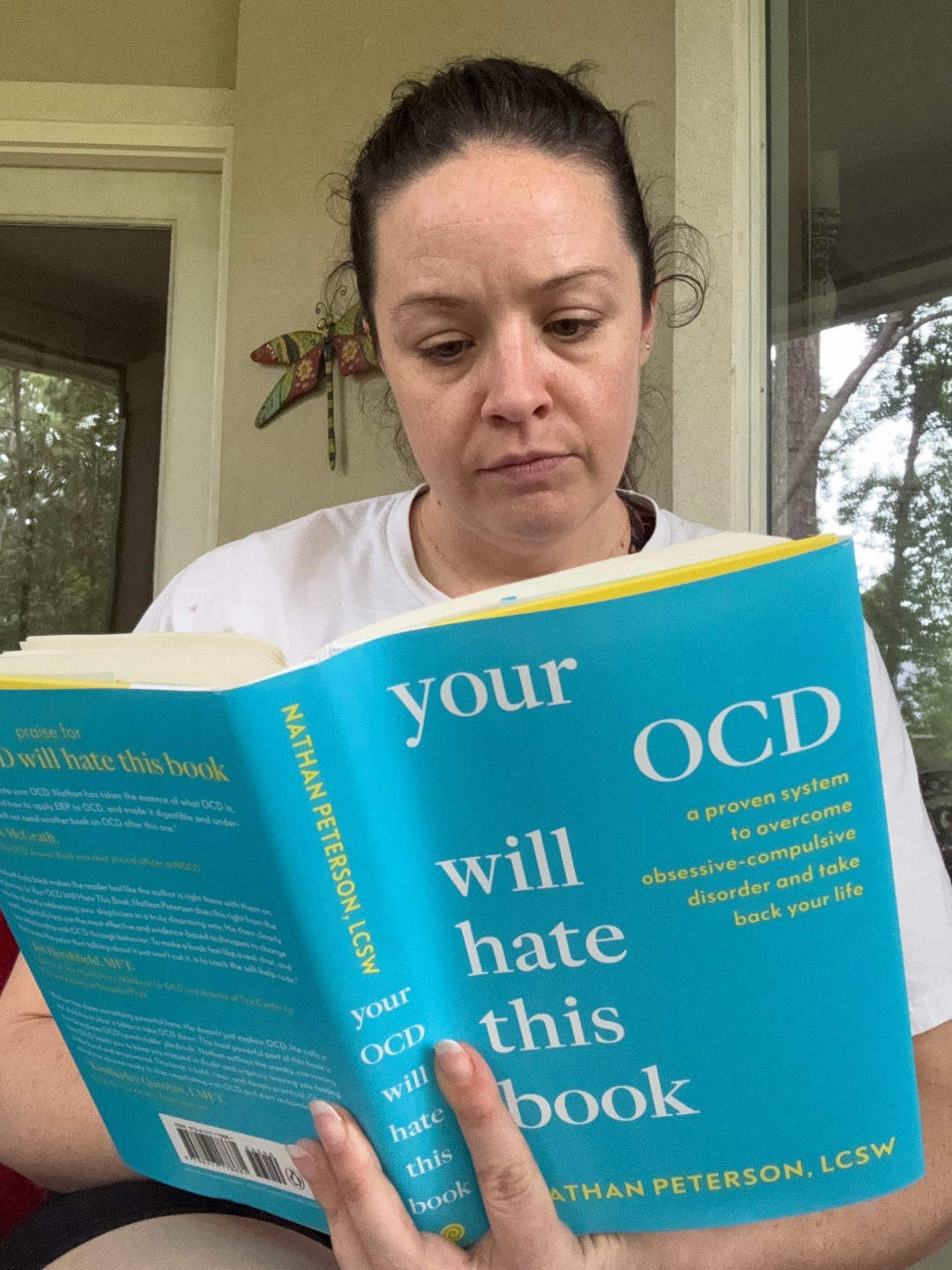
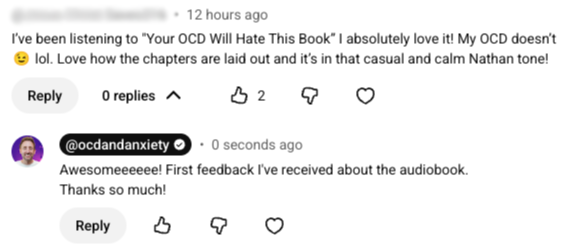
“I'm almost halfway through and so far, I can say it's an excellent and easily digestible explanation with helpful treatment plans included to help anyone who suffers from OCD or has a loved one who deals with OCD.”
It explains ERP in a way that's accurate and thorough, no confusing jargon.
He's incredibly good at meeting people where they're at instead of talking above their understanding level, and this book is exactly that. As a therapist who's specialized in OCD and anxiety since 2008, I'd recommend this book to anyone who knows they have OCD and knows they want help with it.
This is the first thing that has actually made sense to me.
Have dealt with OCD for a long time. Nathan Peterson explains ERP in a way that is not confusing and gives you steps you can actually do. The worksheets help a lot. I liked how he talks about all OCD themes being the same thing basically, that helped me see my own stuff differently.
He makes the seemingly impossible feel possible.
I hesitated to write a review under my own name, but that tells you how highly I recommend Nathan's work. Nathan simplifies something that can feel very heavy. Not everyone has access to an OCD specialist, and that is what makes this book so valuable.
The book in the wild
People are reading it, and sending pictures.
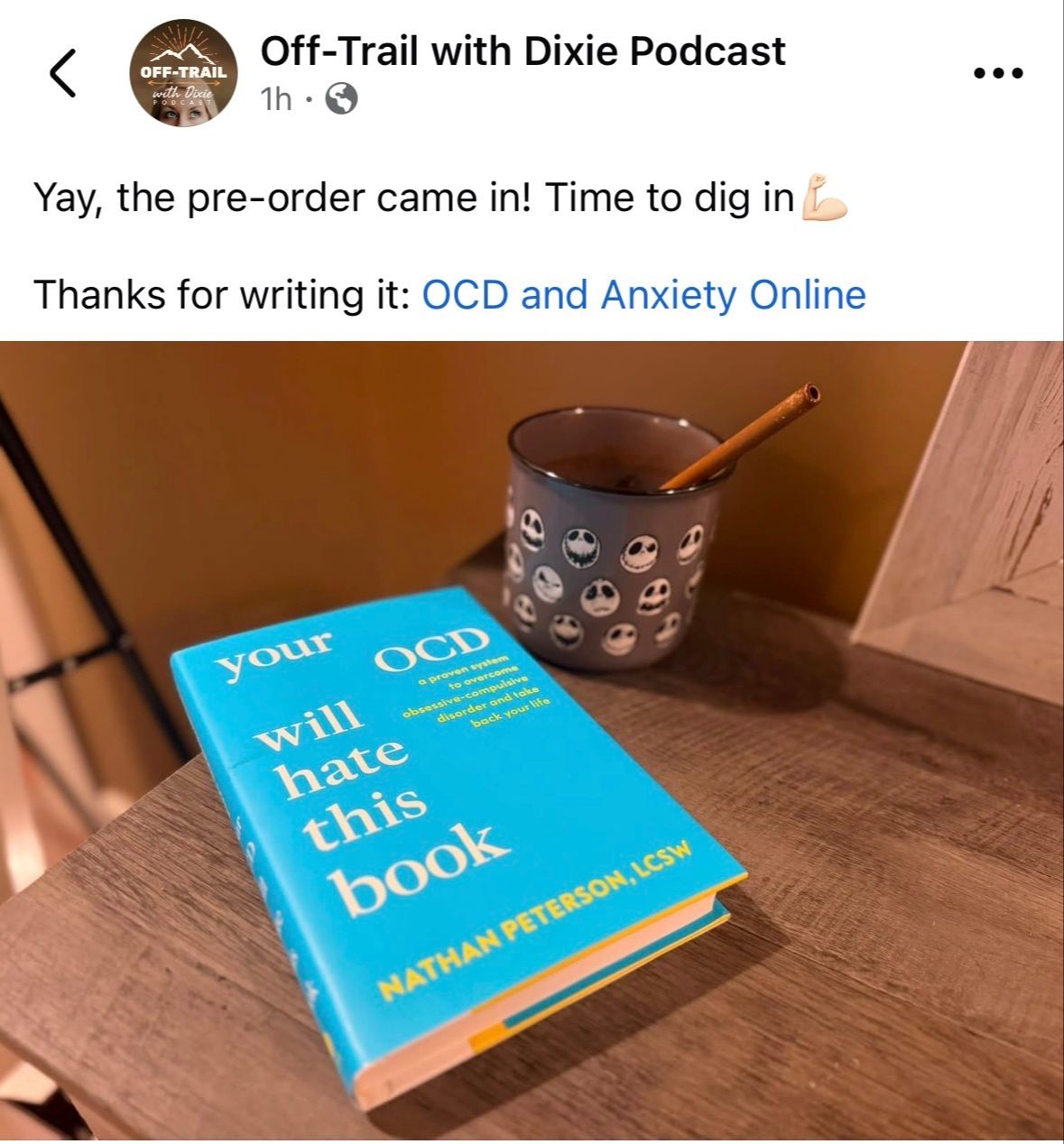

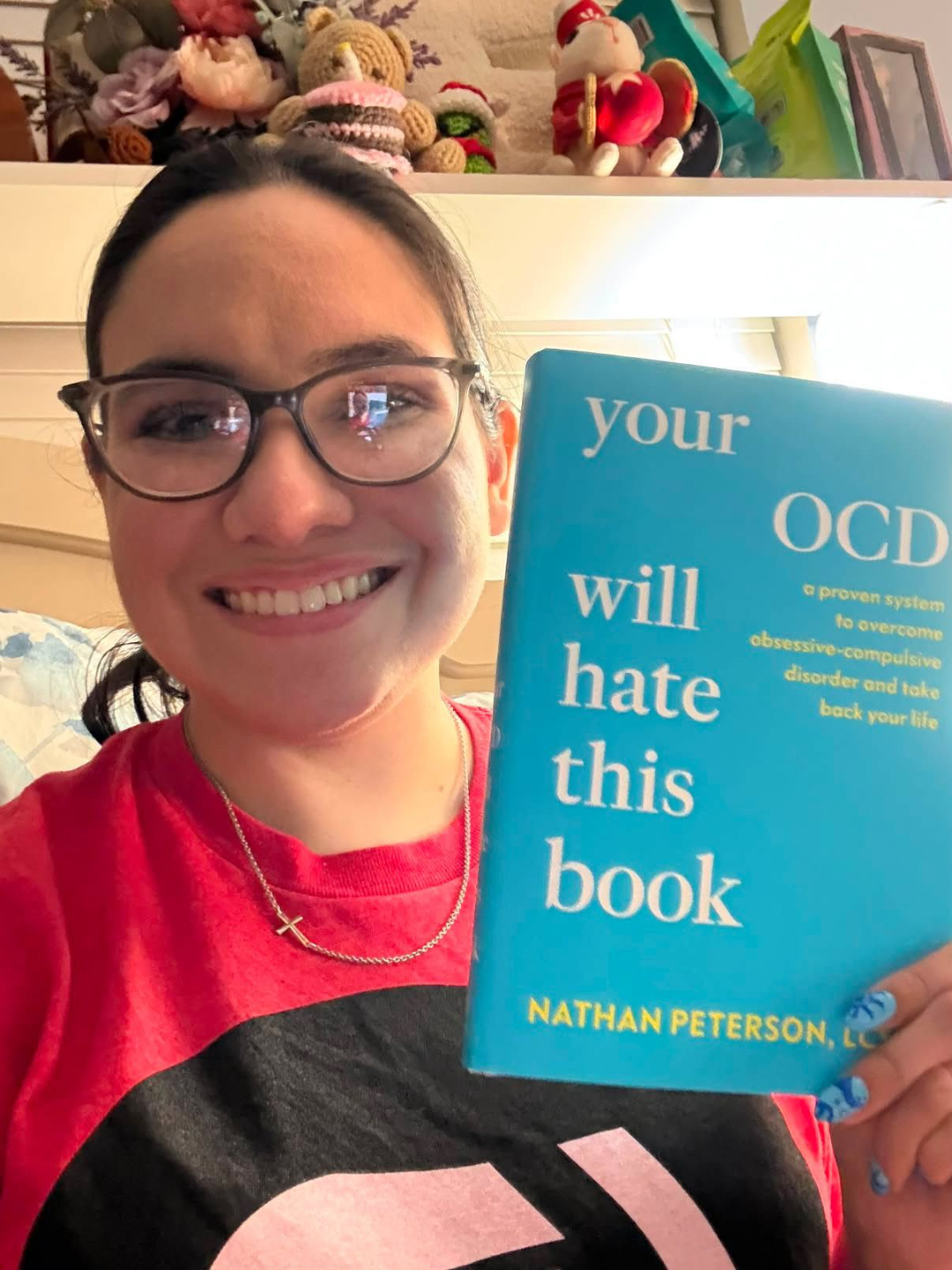
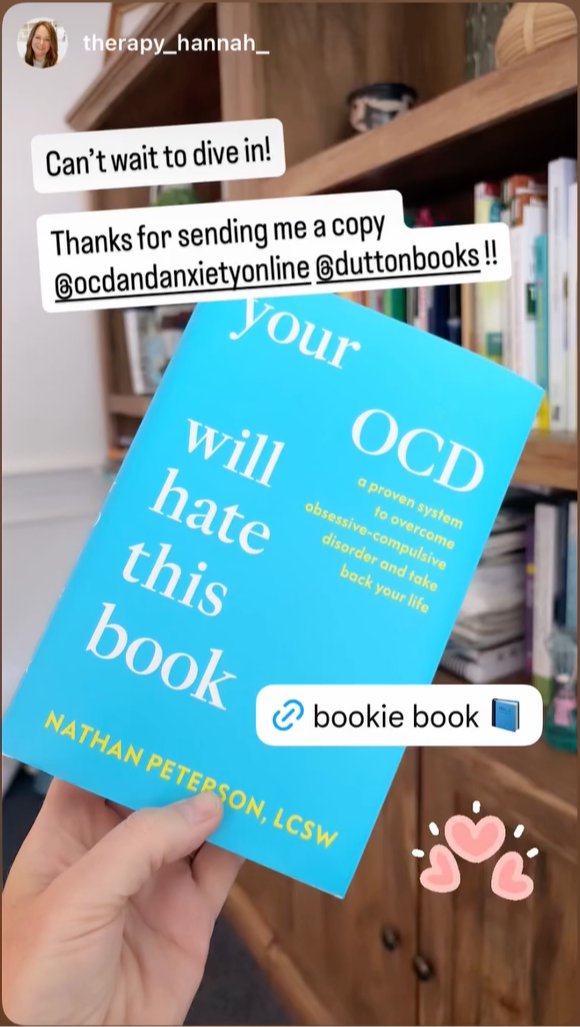

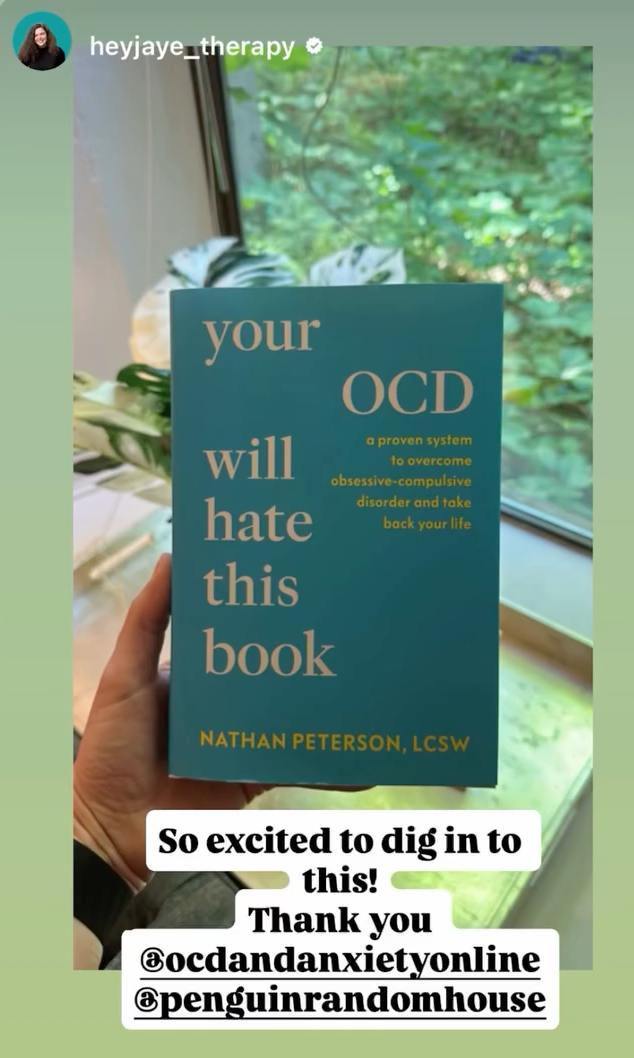
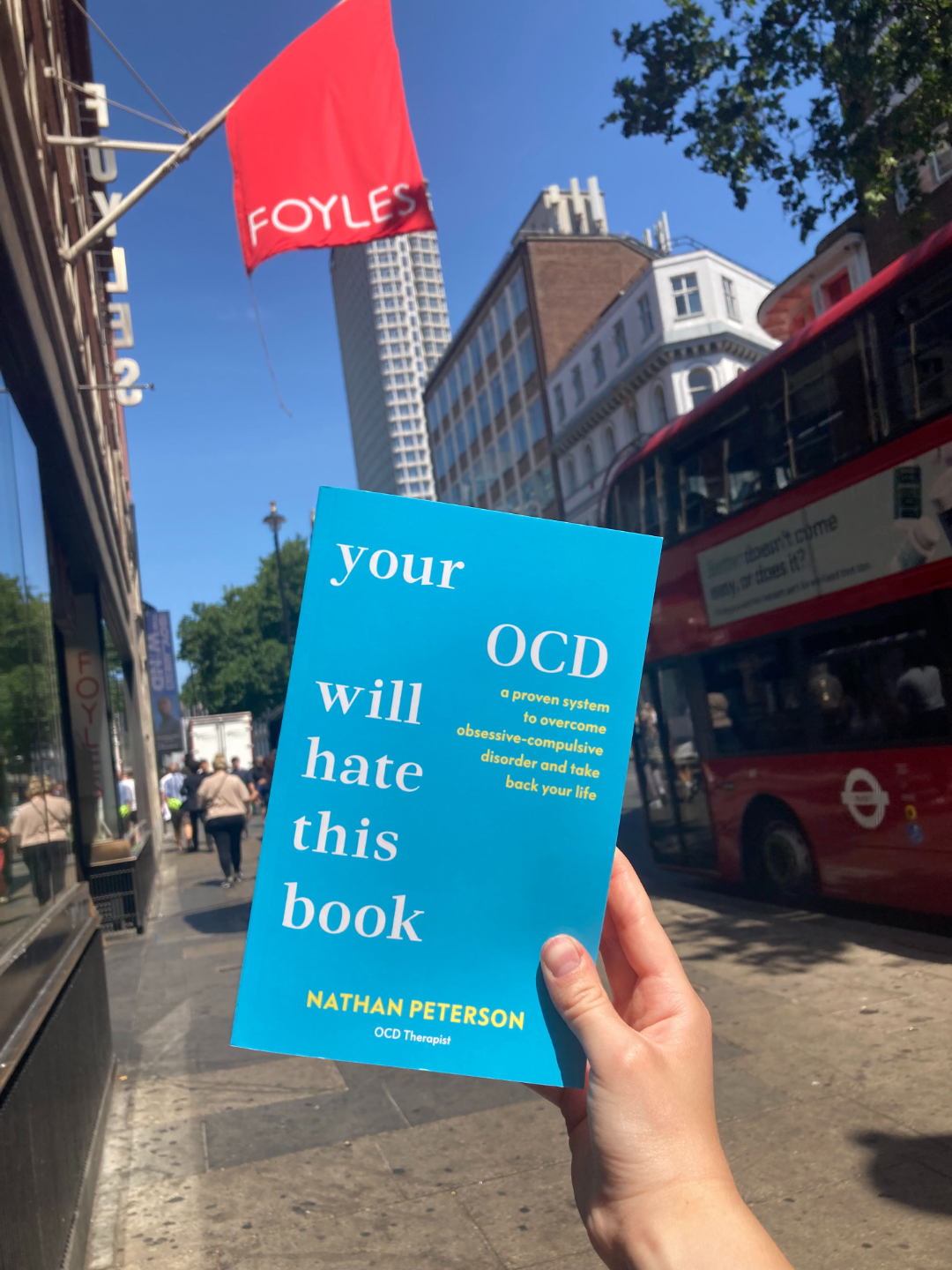
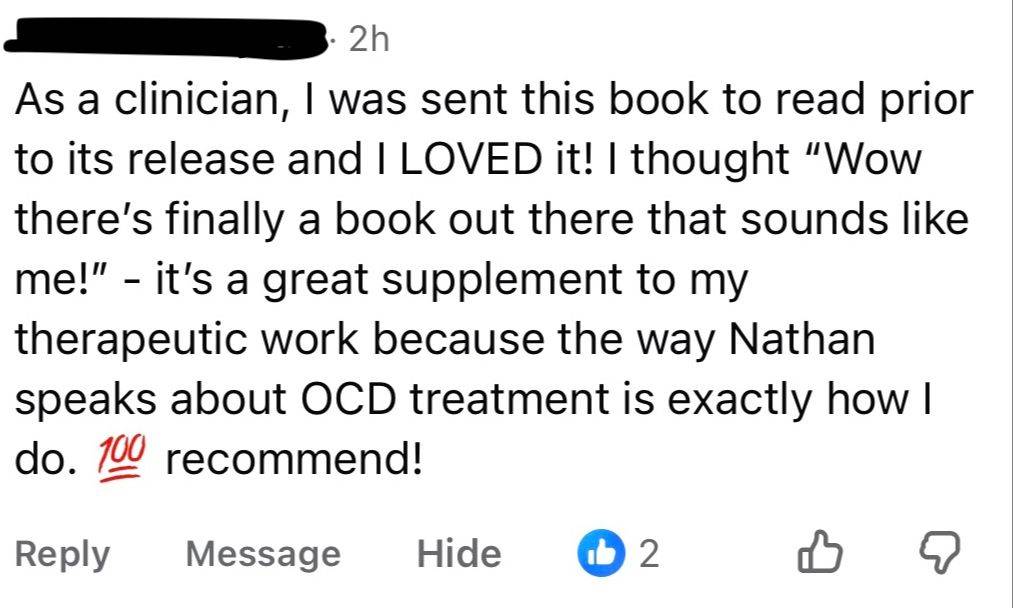
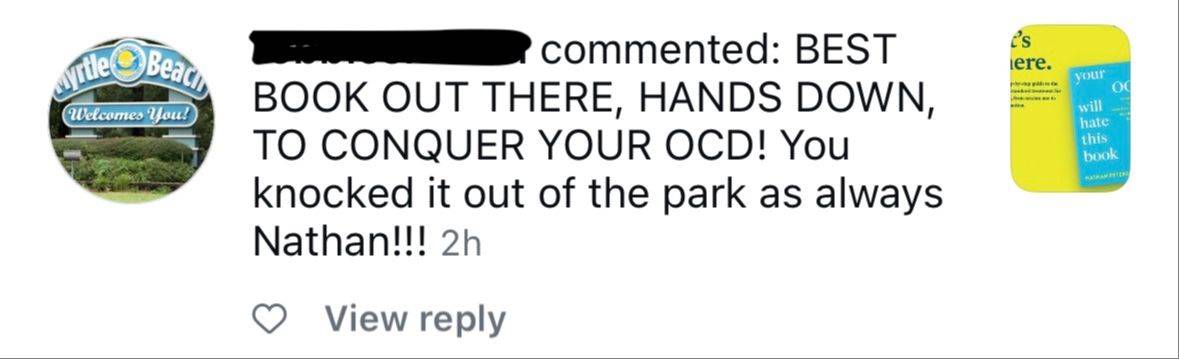

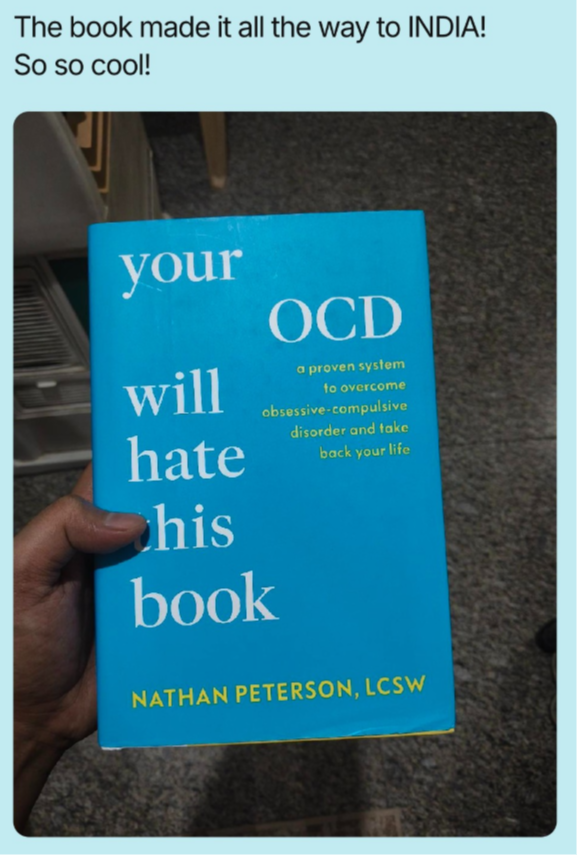
Photos shared publicly by readers on Instagram. Featured with appreciation.
Who it's for
Read this if you recognize yourself here.
If none of these sound like you, the book won't do much for you.

Who wrote it
Nathan Peterson, LCSW
I've spent 15 years doing ERP with people who had OCD running their days, and about as long making videos about it because most people can't get to a specialist.
The questions in my comments are the same ones over and over. What do I actually write down, what do I do when it spikes, how do I know if I'm doing a compulsion. The book answers those in order.
It's the closest thing I can hand you to sitting in my office.
Before you buy it, the things people ask me.
Do I need a therapist to use this?
No. It's written so you can work through it on your own, and it fits fine next to therapy if you already have someone. If you do, bring the worksheets in and work them together.
I already know what ERP is. Is this too basic for me?
Knowing the term and knowing what to write on your own exposure plan are two different things. Most of the book is the second one.
What if my theme isn't in the book?
Chapter 3 is about this. Themes look wildly different and behave the same, so the steps hold up whether yours is contamination, harm, relationships, or something you've been too embarrassed to type into Google.
Can I read it for someone else?
Yes, and parents and partners are a big chunk of who reads it. You'll see which ways of helping feed the cycle, and what to say instead.
Print, Kindle, or audio?
Whichever one you'll finish. I narrated the audiobook, so that's an option too. The worksheets are downloads, so print or Kindle makes it easier to write while you read.
Your OCD has had enough of your time.
Pick a format and start chapter one.