OCD Is Not Your Identity (And How to Find Yourself Again)
Sep 16, 2026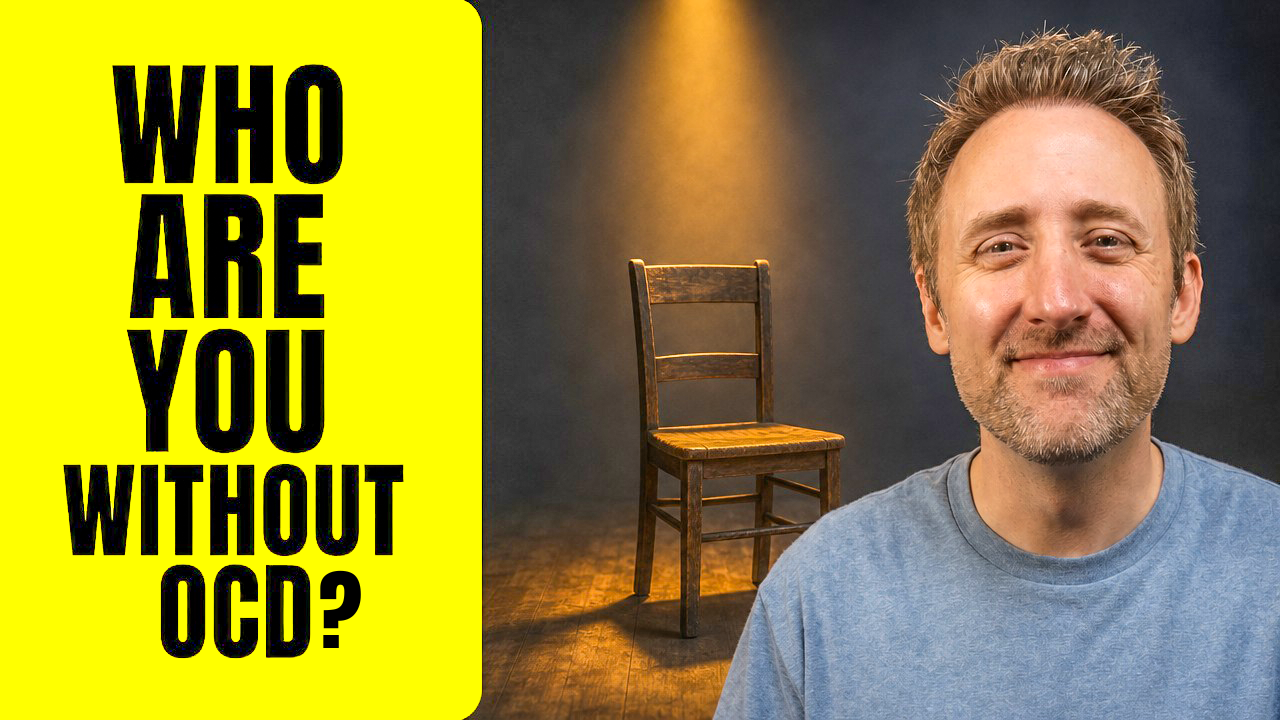
At some point, OCD became your whole personality. Not on purpose. It just kind of happened. Every decision, every plan, every relationship got filtered through it. And now when somebody asks who you are, OCD is somewhere in the answer.
Here's what I want you to hear: OCD is something you have, not something you are.
THE PROBLEM
When OCD Becomes Your Identity, Recovery Feels Like a Threat
When something that loud and consuming takes over, a weird thing happens. Recovery starts to feel dangerous — because you've built your whole sense of self around managing symptoms. You're in the community. You're posting on forums. You're defined by it.
But who are you without OCD?
OCD wants to take up all the space in your head. The way to take that space back isn't just through exposures — it's by filling it with something that's actually you.
Recovery isn't about getting to zero symptoms. It's about getting to a full life — full identity, full self, full sense of who you are. OCD stops being the headline and becomes a footnote.
The Question to Sit With
Not who you were before OCD. Not who you'd be when you're recovered. Right now — who are you when OCD isn't in the picture?
Most people haven't thought about this because OCD has been so loud there hasn't been room for anything else.
Grab a piece of paper and answer these:
- ✓ What do I actually value?
- ✓ What kind of person do I want to be?
- ✓ What lights me up?
- ✓ What do I believe in?
Don't overthink it. Write whatever comes up. The answers are in there — they've just been drowned out. You can also search "value card sort" online for a structured activity to help identify your core values.
I bet OCD is not on your values list. So why are you treating it like it is?
HOW TO ACTUALLY USE IT
Toward or Away?
Once you know what you value, every decision gets a filter: is this moving me toward the person I want to be, or away?
- ✓ Skipping dinner because OCD says it's safer — away
- ✓ Showing up anyway even though you don't feel like it — toward
- ✓ Isolating because you don't want to explain yourself — away
- ✓ Calling someone you actually care about — toward
This isn't about ignoring OCD. It's about having something else to point to — something that's yours — so when OCD tells you to shrink your life down, you have a reason not to.
This is what Acceptance and Commitment Therapy calls valued living. It's how you stop letting OCD write your story.
Do This After Reading
Write down who you are. Not who OCD says you are. Who you actually are.
I'm a good mom. I like to help people. I'm friendly. I value my faith. I'm patient — not every day, but it's something I care about and strive toward.
Then look at your list. Which of these am I not fulfilling right now? When's the last time I actually did something that lines up with this?
Put one thing in your calendar this week. Not an OCD task — a values task. Something that moves you toward who you actually want to be.
You're not the person with OCD. You're the parent, the friend, the creator, the believer, the person who's figuring this all out. You also happen to deal with OCD. That's a very different sentence.
The Master Your OCD course includes a foundation-building worksheet that walks through this identity work — alongside the full ERP system. You can try it free.

Nathan Peterson, LCSW — Licensed therapist specializing in OCD, anxiety, and related conditions. Nathan has helped thousands of people through evidence-based treatment and education.
LCSW Licensed Therapist | 10,000+ Course Students | 24M+ YouTube Views | Penguin Random House Author
 |
Build your identity. Build your life.Master Your OCD includes the foundation-building worksheet, the full ERP system, and everything you need to stop letting OCD write your story.
|
Author