Real Event OCD & False Memory OCD: How to Do the Exposures
Jun 10, 2026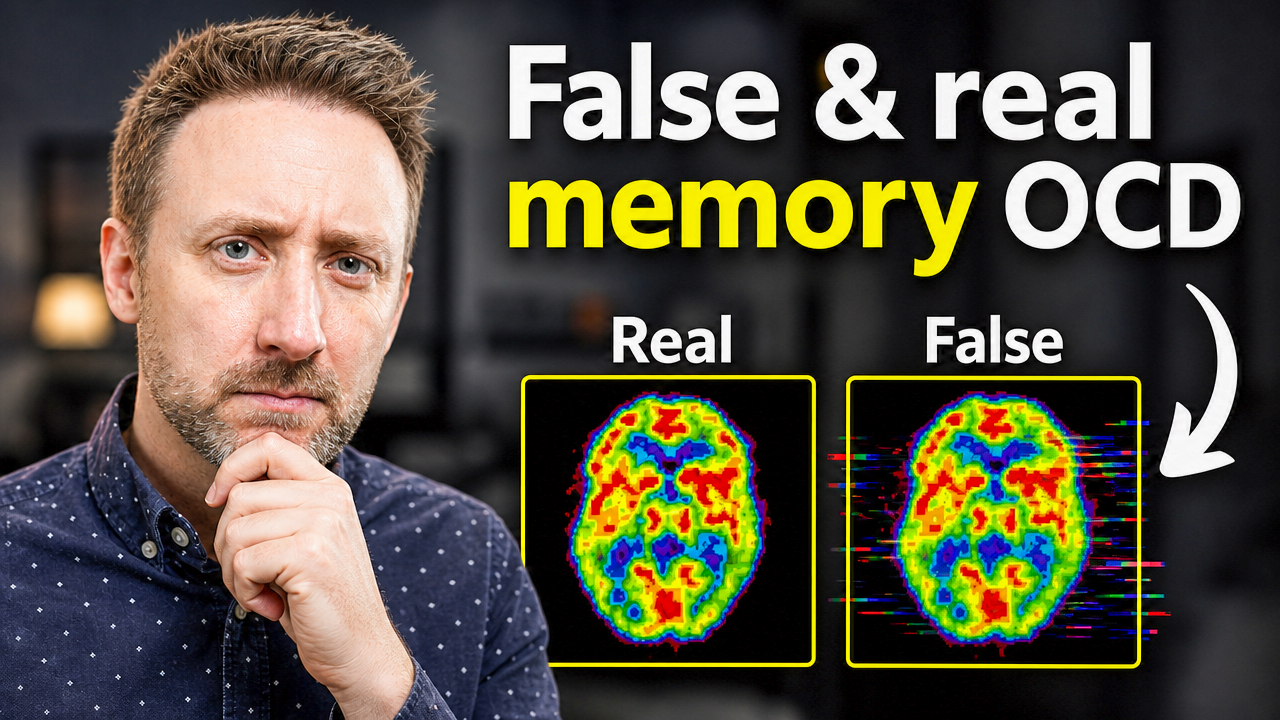
Real event OCD and false memory OCD are brutal. Your brain convinces you that you did something terrible — or maybe you actually did something, and now you can't stop replaying it. Either way you're stuck: ruminating, reviewing, confessing, trying to figure out if you're a bad person.
This post covers exactly how to do exposures for both — not just theory, but actual steps. What to write, what to do, and how to stop the mental reviewing.
THE DIFFERENCE
Real Event OCD vs. False Memory OCD
Real event OCD is when something actually happened. Maybe you said something rude five years ago. Made a mistake at work. Did something you regret. It's real — but now your brain won't let it go. It replays it, analyzes it, and convinces you that you must be a terrible person or that something catastrophic will happen to you as punishment.
False memory OCD is when your brain throws images and fragments of things that might have happened. Did you hit someone with your car? Did you do something inappropriate? You don't know for sure. And that uncertainty is eating you alive. It can even take real moments and sprinkle in a "but did it really happen that way?"
What they have in common: the mental reviewing. The ruminating. Checking your memory over and over. Trying to figure it all out. That's the compulsion — and that's exactly what we're targeting with exposures.
What's Actually Keeping You Stuck
You think if you review it one more time, you'll finally gain clarity. You'll know for sure. But that reviewing is the problem — not the thing you did or thought you did.
Every time you mentally review, you're teaching your brain: this memory is dangerous, we need to solve it. But there is no answer. There's no amount of reviewing that will give you the certainty you're looking for. So your brain keeps going back.
The problem isn't the memory. The problem is how your brain is responding to it — and that's what ERP changes.
THE EXPOSURE
Script Writing for Real Event OCD
Script writing is my go-to for real event OCD. Here's how it works:
You write out the story — the thing that actually happened — exactly as it occurred, as if it's happening right now in this moment. First person. Present tense. Include facial expressions, emotions, details. Make it real.
Then you read it out loud, multiple times. Or record it and listen to it on repeat — while doing dishes, on a walk, making breakfast. As you read it, you're not adding reassurance. No "but it was an accident" or "we were just kids." You read it with acceptance. This happened.
Here's an example script:
"I'm at a sleepover with my friends. We're on the trampoline and I'm organizing a plan to tease somebody. We all start bouncing harder. We're targeting this person. I bounce them so hard they fly off the trampoline and land wrong. I hear a crack. Her wrist is broken. Because of me. I organized this. Years later I see her social media and she's posting about her bad childhood and mental health."
As you read it, thoughts come up. You don't fix them. You respond:
- ✓ "I traumatized this person." — Yeah, maybe, maybe not.
- ✓ "I ruined their life." — Yeah, maybe, maybe not.
- ✓ "Their mental health declined because of me." — Possibly. Sure. Okay.
Pay attention to what the actual story is — and what you're adding to it. Unless there's a social media post that says exactly "you traumatized me and ruined my life" — you added the rest. That's what OCD does.
What Real Guilt Is Supposed to Do
When we actually do something wrong, guilt and shame exist for a reason — they help us learn. You feel it, you recognize what happened, you decide not to do it again. Maybe you make amends. And then you move on.
OCD doesn't allow that. It says the thing you did means you're a bad person — permanently. It keeps pulling you back to the memory instead of letting the natural guilt process complete and release.
That's in the past. You're here now. You need to live now. The goal is to take all the power and value away from the story that says you're in danger — and get back to your actual life.
FALSE MEMORY OCD
Script Writing for False Memory OCD
Even if the memory probably isn't real — we still write the script. We write the story your brain is coming up with, as if it actually happened.
Here's an example:
"I'm in a conference room with my coworker. We're in a one-on-one meeting. We're sitting close, too close. I touch them. It's inappropriate. I cross a line. I make them uncomfortable. They freeze. They don't say anything because they're scared. When they leave the room, they're going to report me. HR is going to call me in. Everyone at work will find out. My career is over. My life is over."
Scary, right? But we don't add reassurance. No "I don't think it actually happened that way" or "I would remember if I did something like that." You can keep saying that — but the brain keeps going back. So we read it over and over instead.
Any threat that comes up — agree with it or use maybe maybe not:
- ✓ "They're going to call you in." — Yeah, totally.
- ✓ "You're going to lose your job." — Awesome.
- ✓ "You're the kind of person who does this." — We act like we don't care.
The only exception: if there's something absolutely obvious — a 100% clear, undeniable sign that something really did happen. That's worth addressing. But vague memory fragments, feelings, and what-ifs? That's OCD. Read the script and move on.
THE MOST COMMON MISTAKE
Where People Go Wrong With This Exposure
People read the script — and then spend the next hour mentally reviewing it. "Did I actually do that? I don't know if I believe this story. This probably isn't right, but what if it is?"
That's the compulsion. That's what we're not doing.
You read the script. You respond with maybe maybe not or full agreement. And then you immediately go do something else. Making breakfast. Sending emails. Going for a walk. You go live your life.
When it pops up again — and it will — you do the same thing. "Sweet. Script time. I'm ready." Listen to it while you're doing dishes. Make a dance about the story if you want. That's the exposure that retrains the brain.
OCD Is Going to Tell You Your Case Is Different
I know what you're thinking right now. "Okay, but your example is silly. Mine is way more serious. I can't use this for something like what I did."
That's OCD. That's exactly what it says to keep you stuck — your OCD is different from everyone else's, so treatment can't work for you. Don't fall for it.
The goal of this exposure isn't to know for certain that the story was true or false, or that you're really a good person. It's to get to a place where you're living your life now — not stuck replaying the past. What are you doing today that's worthwhile? Start there.
Watch the full video above for more examples and the complete walkthrough. And if you want script writing templates and step-by-step ERP for real event and false memory OCD, the Master Your OCD course covers all of it. You can try it free.
Nathan Peterson, LCSW — Licensed therapist specializing in OCD, anxiety, and related conditions. Nathan has helped thousands of people through evidence-based treatment and education.
LCSW Licensed Therapist | 10,000+ Course Students | 24M+ YouTube Views | Penguin Random House Author
 |
Get the script templates and full ERP systemMaster Your OCD includes script writing templates, step-by-step ERP for real event OCD and false memory OCD, and every other subtype — all from home.
|
Author