More Real OCD Questions from Reddit — A Therapist Answers
Jul 15, 2026
Back on Reddit. More real OCD questions from people who are trying to figure out what's happening in their heads — and what to do about it.
Here's what came up this round.
QUESTION #1
"Do people with OCD tend to have high IQs?"
Someone made the observation that every person they'd met with OCD seemed to be highly intelligent — always in their head, analyzing everything. And honestly? I can't argue with the pattern.
The people I see come through my office are some of the smartest people I've ever met. A lot of them end up as engineers. Problem-solving, problem-solving, problem-solving — interesting that a brain wired to constantly analyze everything would gravitate toward a field that rewards exactly that.
The OCD brain processes differently. More is coming in. It has to sort through it in ways that most people never experience. That's exhausting — and also potentially why these brains are so sharp when pointed at something else.
QUESTION #2
"I feel like my friend is dirty — their aura gives me the creeps"
The full post was about a friend who seemed to mirror other people's mental health diagnoses — and now claiming to have the same OCD diagnosis. It was giving this person a sense of violation and disgust.
My first read: this could be emotional contamination OCD. The idea that associating with someone "creepy" or "dirty" somehow makes you contaminated too. Just thinking about them, saying their name, seeing their picture — it all triggers that feeling of being tainted by association.
ERP approach: Write their name down over and over. Say it out loud. Look at their picture. Send them a text. "Maybe I'm dirty. Maybe I'm not. I love this feeling. I hope it lasts all day." Make it so ridiculous that the brain eventually just stops caring.
QUESTION #3
"I feel like I'm not disgusted enough at my intrusive thoughts"
This one I see constantly. The person has OCD, gets intrusive thoughts, and then starts worrying that they're not disgusted enough by them — because if they were truly a good person, shouldn't they be more horrified?
That's seeking evidence. It's a compulsion. The level of disgust becomes another thing to monitor and analyze, another way to try to verify you're okay.
You don't need to feel disgusted by your thoughts. A thought can exist without you reacting to it at all. We're not going to figure out whether the amount of disgust you feel means something about your character — because you're not going to get a satisfying answer either way.
"Not feeling disgusted enough. Cool. Maybe that means something about me. Maybe not. I'm not going to figure it out." That's the response. Embrace the uncertainty and keep going.
QUESTION #4
"Nobody can convince me I'm a good person. I fear everyone will eventually see how terrible I really am."
Classic real event OCD combined with false memory OCD — taking actual mistakes from the past and then asking "but did it fully happen that way? What were my real feelings? Did I ruin their life?" The loop just keeps going.
Here's the thing: nobody is going to convince you that you're a good person. And I'm not going to try. Because even if I did, would you believe it? Probably not — and that's the point. OCD doesn't respond to evidence.
What matters is: what are you doing now? Think about everyone you know — do you know every mistake they've ever made? No. You see them for who they are right now. Let the past stay in the past.
Can I learn from this past mistake? Yes. Have I learned? Yes. Am I beating myself up about it? That part changes nothing — I already know I shouldn't have done it. "Maybe it happened that way. Maybe not. I'm not figuring this out." And move on.
QUESTION #5
"Does anyone else feel a sense of impending doom they can't pinpoint?"
Yes. That feeling personally — I get it. Waking up at 3 a.m., heart racing, anxious, but no idea why. The brain says: there could possibly be a problem. I don't know what it is yet. Let me put you on high alert.
And then what keeps it going is the attempt to problem-solve it. You start scanning all the what-ifs until you can pin it on something — and then temporarily feel better. But the pinning is the compulsion.
"I'm so glad you're here right now. I'm not going to figure out why I'm anxious. That's not my job right now. Cool. Thanks for showing up. Sweet 3 a.m. party." Don't figure it out. Keep living your life exactly as you were. The feeling will do what it does on its own.
QUESTION #6
"If the disorder isn't my fault, how come I'm the one who has to fix it?"
That's a genuinely fair question. And it does feel unfair — because it is.
But here's the perspective that actually helps: we all face things in life that aren't our fault that we still have to deal with. That's just how life works. You didn't ask for OCD. You didn't cause it. And you're still the only one who can do the work to recover from it.
You can sit in the mindset of this isn't fair, so I shouldn't have to do anything — and stay stuck. Or you can say: this isn't my fault, and it's still my job to take care of it.
Both things can be true. It's unfair. And life is worth living. And the treatment works. Those can all exist at the same time.
Same Pattern, Different Questions
Every question in this post — the IQ worry, the emotional contamination, the disgust monitoring, the impending doom — they all run on the same OCD mechanism. Brain fires an alarm. You respond to the alarm. The alarm gets louder.
The answer across all of them: don't figure it out. Don't solve it. Don't seek certainty. Let it be there and keep living.
Maybe, maybe not. That's the whole thing.
If you want step-by-step help building that skill, the Master Your OCD course walks through ERP for every theme — you can try it free.

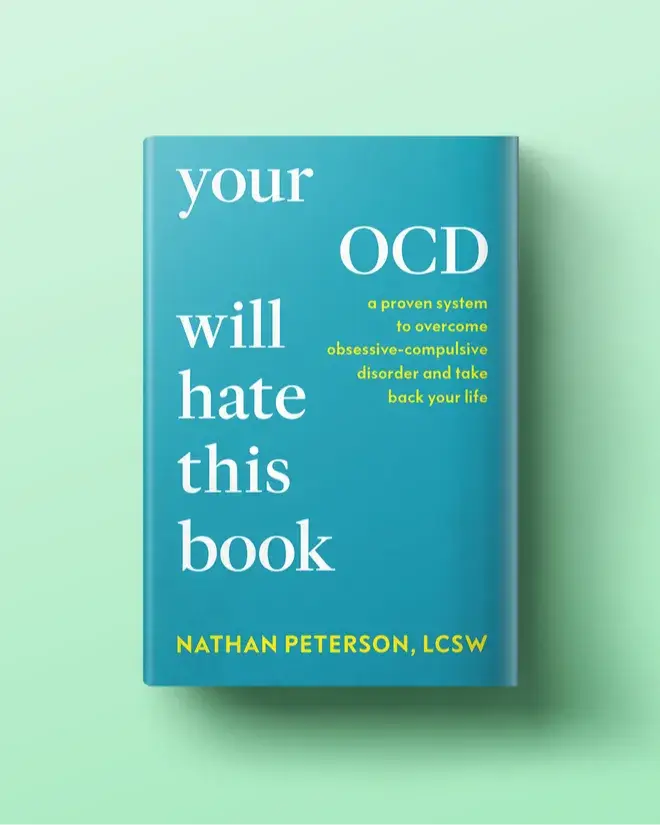
Nathan Peterson, LCSW — Licensed therapist specializing in OCD, anxiety, and related conditions. Nathan has helped thousands of people through evidence-based treatment and education.
LCSW Licensed Therapist | 10,000+ Course Students | 24M+ YouTube Views | Penguin Random House Author
 |
Ready to stop the alarm for good?Master Your OCD is a step-by-step ERP course covering every OCD theme — contamination, real event, emotional contamination, impending doom, and everything in between.
|
Author