Scrupulosity OCD: How to Stop the Guilt Loop
Jul 08, 2026
You can't stop replaying it. What you said, what you did, what you thought for half a second. And now you're stuck in a loop trying to figure it out.
Am I a bad person? Did I cross the line? Did I sin?
The guilt is relentless. And no matter how many times you review it, confess it, or apologize for it — it comes right back.
That's scrupulosity. OCD hijacking the thing you care about most — your faith, your morals, your character. Here's how to treat it.
WHAT IT IS
Two Flavors, Same Treatment
Scrupulosity has two forms — and the treatment is identical for both, because OCD doesn't care what it targets. It picks whatever you care about most and uses it against you.
- ✓ Moral scrupulosity — the fear of being a bad person, doing something unethical, violating your own values
- ✓ Religious scrupulosity — the fear of sinning, offending God, not being right with your faith
If you care deeply about being honest, OCD convinces you that you're a liar. If you care about your faith, OCD tells you you offended God. If being a good person matters to you most, OCD says you're terrible.
OCD gives you a heavy, crushing guilt — and your brain concludes: "If I feel this bad, I must have actually done something wrong." But the feeling isn't evidence. It's OCD.
TECHNIQUE #1
Sit with the guilt without solving it
This is the one people resist most — and it's the most important. Here's the pattern keeping you stuck:
Guilt shows up → brain says "figure out why" → you review, replay, analyze → brief relief → it comes back stronger. The reviewing is a compulsion. The mental detective work is what's feeding all of this.
Instead: when the guilt hits, sit with it. Don't distract yourself. Don't list reasons why you're actually a good person. Don't pray extra times. Don't replay the conversation. Just feel it for two to three minutes. Let it be there. And while you're sitting with it:
Say out loud or in your head: "Not figuring this out." Or: "Maybe, maybe not." That's the response prevention — breaking the link between guilt and compulsion.
Then — and this is key — go looking for that feeling on purpose. Deliberately bring up what triggered it. Set a timer. Find the trigger. Feel the guilt. Say your phrase. Let the discomfort drop on its own.
"I love this guilt. This is amazing. I hope it lasts all day. Maybe it means something about me. Sweet." That's ERP. You're training your brain that guilt doesn't require immediate action.
TECHNIQUE #2
Write the doubt down and read it out loud
Your brain is screaming something at you. I'm a bad person. I hurt them and they hate me. I sinned and God's disappointed. I'm living a lie.
Most people argue back. They look for evidence it isn't true. They try to counter the thought. That's a compulsion too.
Instead: write down whatever OCD is telling you. Get it on paper. Read it out loud five or ten times. Then after reading it say: "Eh, maybe. Sure. Okay. Not figuring this one out."
No "but" statements. No mental reviewing. No texting someone to check if you're okay. You're not trying to decide whether the thought is accurate — you're practicing the response that thoughts are just thoughts, no matter how convincing they feel.
Guilt is supposed to help us learn from something we actually did wrong and then move on. When you can't move on — when the loop keeps running — that's not conscience. That's OCD.
TECHNIQUE #3
Do the thing you're avoiding
Scrupulosity makes you avoid. You stop going to church because of blasphemous thoughts. You stop texting a friend because you're convinced you hurt them. You bail on family dinners because maybe you'll say something wrong. You stop praying because intrusive thoughts keep showing up when you try.
Every time you avoid, OCD gets bigger. The exposure is simple: go back.
- ✓ Go to church. Show up to dinner. Text the friend. Pray.
- ✓ While you're there: "Maybe they think I'm terrible. Maybe I sinned. Maybe, maybe not."
- ✓ Don't confess when you get there. Don't ask "are we okay?" Don't apologize. Just show up and be you.
Some therapists will also have you practice thinking the avoided thoughts on purpose. Write them down. Read them out loud. "I hate Jimmy. I don't care what happens to them." Over and over, with a response: "Maybe I'm a terrible person for thinking this. Maybe not. I'm not figuring it out."
You're showing your brain: I can have a thought, I can say words, I can write whatever I want — and it only means something if I make it mean something.
Scrupulosity Is a Big Fat Liar
People with scrupulosity OCD are almost always deeply moral, deeply faithful people. The guilt feels so real because they care so much. OCD knows that — and uses it against them.
The path forward isn't to stop caring about your faith or your values. It's to stop letting the guilt drive the bus.
Ask yourself: if I didn't have OCD, what would I be doing right now? I'd be praying. Going to church. Hanging out with my friend. I wouldn't be texting and apologizing for something that didn't actually happen.
When you stop treating the guilt like an emergency — it stops becoming one.
The Master Your OCD course takes you through this entire process step by step — including how to build exposures for scrupulosity specifically. You can preview it free.

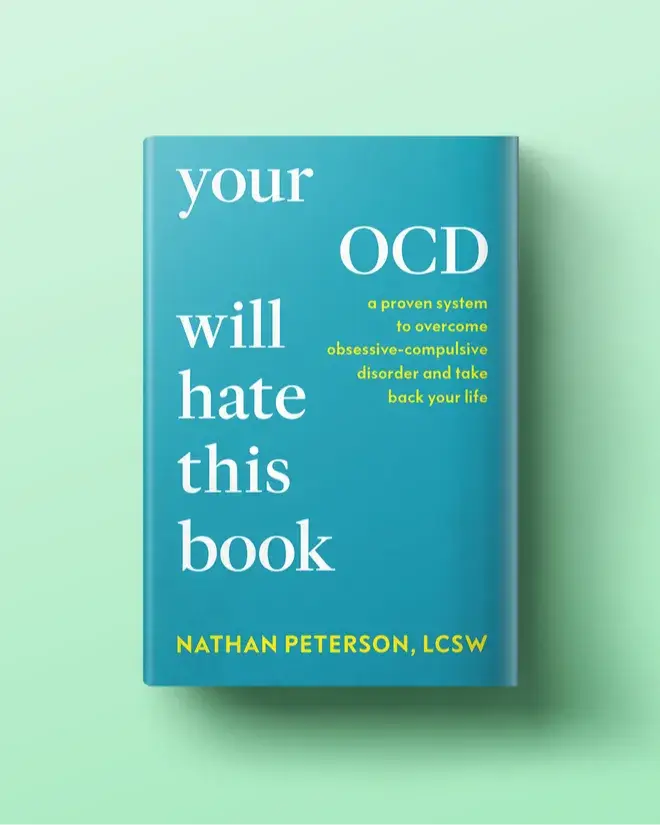
Nathan Peterson, LCSW — Licensed therapist specializing in OCD, anxiety, and related conditions. Nathan has helped thousands of people through evidence-based treatment and education.
LCSW Licensed Therapist | 10,000+ Course Students | 24M+ YouTube Views | Penguin Random House Author
 |
Ready to stop the guilt loop for good?Master Your OCD walks through ERP for scrupulosity step by step — including how to sit with guilt, do the exposures, and stop every compulsion that's keeping you stuck.
|
Author