When Calming Tools Make Anxiety Worse (Two Questions to Find Out)
Nov 11, 2026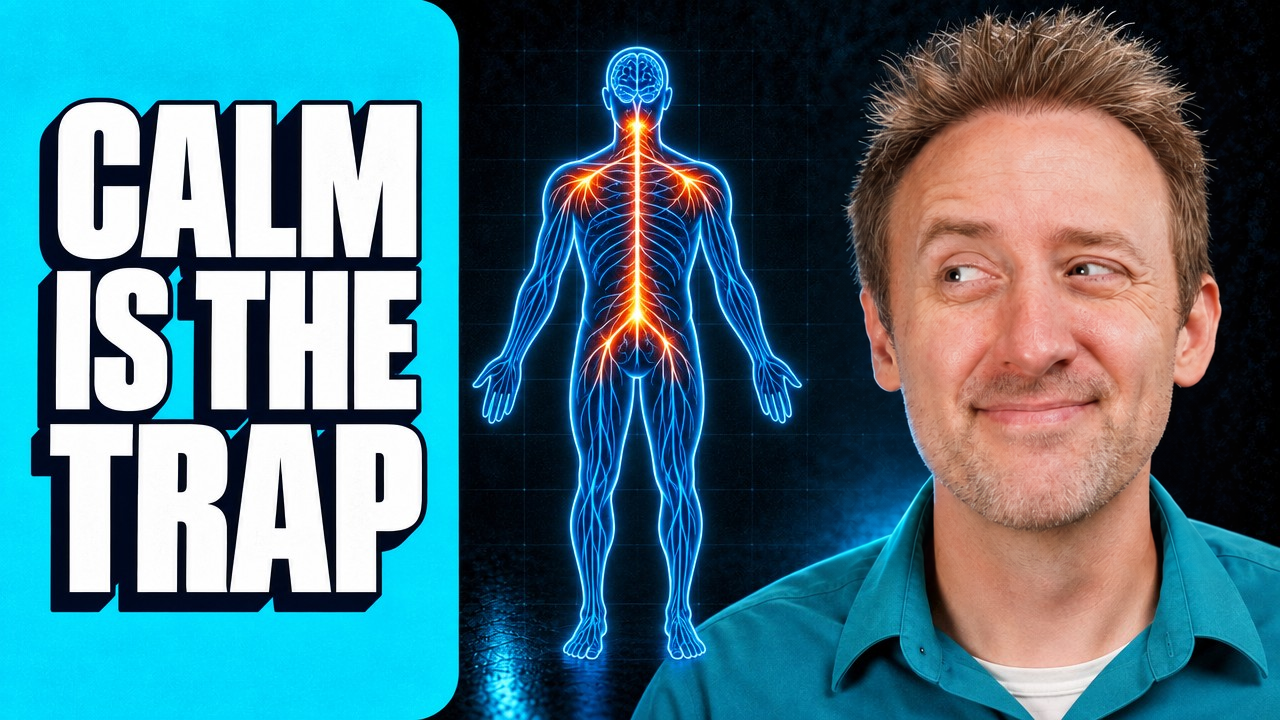
A while back, my nervous system felt off for weeks. Maybe months. I tried everything. Breathing exercises, magnesium, massages. I even looked into vagus nerve stimulators.
And I ended up feeling worse.
The tools weren't the problem. Why I was using them was. Here's how to tell the difference, and what your nervous system actually needs from you.
Your nervous system has a gas pedal and a brake
Part of your nervous system runs on autopilot. It keeps your heart beating and your lungs going without you thinking about it. That part has two sides.
The gas pedal is fight or flight. Heart speeds up, breathing gets fast, muscles tense. You're ready to deal with danger. The brake slows everything down once the danger passes.
The brake doesn't need you to press it. When your body stops pushing the gas, the brake comes on by itself. That's how it's built.
Pushing the gas and the brake at the same time
When my nervous system felt off, I kept trying to fix it. I'd do the breathing and then check: did it work? I'd take the magnesium and check again. Every check told my brain there was still a problem.
And when your brain thinks there's a problem, it pushes the gas harder.
The tools turned into compulsions. I wasn't using them to take care of my body. I was using them to make the feeling go away right now. And I needed proof that they worked.
Research on this is actually mixed. Some studies find calming tools can get in the way of treatment. Others find they help. But one detail stood out: the more people treated calming tools like protection from danger, the less they improved. The reason behind the tool made the difference, not the tool itself.
Two questions to ask yourself
The same breathing exercise can help you one day and keep you stuck the next. The breathing didn't change. The reason did. So when anxiety hits, ask:
Does this have to work?
If you'd panic or feel the need to do it again when you don't calm down, it's likely a compulsion.
Am I checking if it's working?
If you're halfway through a breathing exercise asking yourself if you feel better yet, that's monitoring. And monitoring keeps your foot on the gas.
If you answered yes to either one, the habit might be feeding the anxiety. That doesn't mean you're doing anything wrong. You're just trying to feel better. Give yourself some grace for that.
Let the brake do its job
When your body starts revving, you notice it. Not to fix it. Just: my body is revving right now. Let it be there and go back to what you're doing.
At some point it has to let off the gas. But the more you try to control it, you're pushing it back down. You're still signaling to your body that there's a problem. Your body hears that and keeps the engine going.
Your body can learn to handle the gas pedal without you stepping in. It already knows how. The more you step back, the more room it has to do that.
Outside of anxious moments, you can keep the breathing routine. Go for a walk. Take care of yourself. But not because you have to. Because you like to.
What actually helped
After months of what felt like torture, here's what finally shifted things. I stopped trying to fix it. I got out of the house even on days I didn't feel great. I acted like it wasn't a problem, even when my body felt like it was vibrating.
I said hi to it. I used some mindfulness, not to make it go away, but to put my attention back on my life. To sit with the feeling and just let it be there.
"This is a feeling. I'll let it be here. Welcome."
It didn't flip a switch. Things started to settle when I stopped looking for a cure. Not when I found one.
Your first step
Pick one calming habit you reach for when anxiety hits. Ask yourself both questions. If it fails the test, next time anxiety shows up, try skipping it. See what happens when you just let it be there.

Nathan Peterson, LCSW
Licensed therapist specializing in OCD, anxiety, and related conditions.
10,000+ course students · 28M+ YouTube views · Penguin Random House author
Learn when to use tools and when to get out of your own way
A step-by-step ERP system for OCD and anxiety. 67 videos, 18 worksheets, every theme covered.
See the courseAuthor