5 Unusual OCD Themes (And How to Treat Each One)
May 27, 2026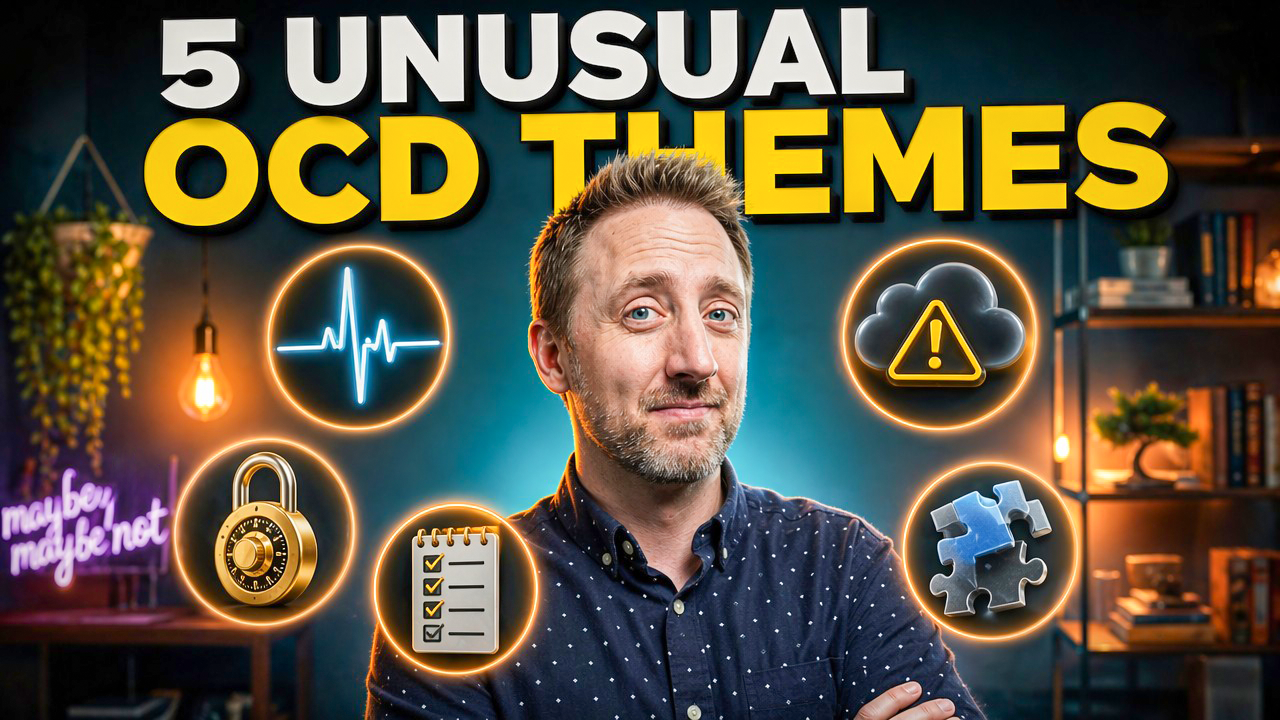
Do you think your OCD is too weird to talk about? That no one else has it?
Here are five OCD themes that rarely get discussed — and exactly what treatment looks like for each one. If your theme isn't on this list, that's okay. The treatment works the same regardless of what OCD has latched onto.
For all of these, we're using Exposure and Response Prevention (ERP) — choosing the action, choosing the response, and resisting the compulsions.
THEME #1
Just Right OCD
Things have to feel right. Not look right, not be symmetrical necessarily — just feel a certain way. There's an internal sense that something is off, and you have to repeat the action until that internal clock clicks and says that was it, now you can stop.
It can take over an entire day. Walking in and out of a doorway. Picking something up and putting it down over and over. Writing something out until it feels right. Tapping. Touching things a certain way. The feeling is hard to describe — something just feels wrong and has to be fixed.
What ERP looks like:
We mess it up on purpose. Whatever your brain says needs to feel right — we don't fix it.
- ✓ Walk through the doorway and keep going — even when the brain says go back and do it again
- ✓ Walk back through and do a little spin — who cares?
- ✓ Multiple times a day, walk around your house, tap things, touch light switches, pick things up and put them down wrong — until the feeling comes up
- ✓ Write down everything you do and go mess it all up on purpose, one by one
The response: "I love this feeling. This is amazing. Hope it feels wrong all day. Hope I keep thinking about how I never fixed it." You're finding the trigger on purpose, using the response, and resisting going back to fix it.
THEME #2
Need-to-Know OCD
You cannot move on until you have a specific piece of information. Not because you actually need it — but just in case. The brain says what if I need this later? so you write everything down, save everything, keep notes on your phone, carry papers around with you.
It could be something as minor as driving past a billboard and not finishing reading it. Your brain says: turn around, go back, you need to read the whole sign. It sounds like curiosity — but it's not. It's compulsive information-seeking driven by a what-if.
What ERP looks like:
- ✓ Watch a video and skip parts of it deliberately
- ✓ Let someone tell a story and have them stop halfway through
- ✓ Drive past billboards — quick glance, then eyes forward. Don't go back.
- ✓ Close all browser tabs. Delete the notes. Focus only on what you actually need.
"I missed the CPR info. When my time comes I won't know what to do. Whoops. Maybe, possibly. Anything's possible." Live with the uncertainty. Keep going. Don't go back.
THEME #3
Existential OCD
Your brain gets stuck on unanswerable questions about existence and reality. What is the meaning of life? What is the point of anything? Am I actually real? Is any of this real?
Here's the thing: none of us know the answers to these questions. We all think we do, based on our beliefs and faith, but we're all guessing at the end of the day. OCD grabs onto that and says you're different — you actually need to know. And it's torturous.
What ERP looks like:
- ✓ Write out all the feared questions — then deliberately don't seek answers
- ✓ Watch videos on different philosophical theories — not to gain certainty, but to make yourself more confused on purpose
- ✓ Read philosophical articles that raise more questions — and sit with them without resolving
- ✓ Say out loud: "I never will know the answer. I'm going to sit with this feeling forever."
"What's the point of this life? I don't know. Am I really here right now? Maybe, maybe not." And then — go eat at a restaurant. Go hang out with a friend. Watch a movie. That's life. You don't need the answers first.
THEME #4
Sensorimotor OCD
The brain locks into automatic body functions — breathing, blinking, swallowing, your heartbeat. These things happen naturally, but suddenly the brain says pay attention to this. And you can't stop.
For some people the fear is: what if I never stop noticing my breathing? For others it's the opposite: what if I stop focusing on it and then I stop breathing? So they monitor it constantly. Both responses — hyper-focusing and trying to distract away from it — make it worse.
The key insight: If you're doing ERP to make the noticing go away — it won't work. That outcome focus is itself avoidance. The goal is to notice, without controlling. Do your normal activities without trying to manage the sensation either way.
What ERP looks like:
- ✓ Set timers throughout the day and deliberately notice your breathing
- ✓ Focus on your heartbeat — turn it into a song
- ✓ Don't distract, don't control — just notice and keep doing what you were doing
"I hope I notice my heartbeat through my wedding today. That would be great." Find the threat, agree with it or sit with the uncertainty — and keep going.
THEME #5
Suicidal OCD
Intrusive thoughts about ending your life — but you don't want to die. These thoughts are ego-dystonic, meaning they go against everything you value, which is exactly why they're so terrifying.
People are often terrified to tell anyone. Therapists who don't specialize in OCD can respond in ways that make it worse — creating safety plans, treating it like suicidal ideation when it isn't. But the horror and fear you feel about the thought? That tells me you enjoy life.
How to tell the difference: With suicidal ideation there's typically sadness and depression — not a frightening fear of "what if I actually did it?" With suicidal OCD, the thought is horrifying precisely because it conflicts with your values and love of life. The anxiety is the signal. If you're unsure, talk to a therapist who specializes in OCD first.
What ERP looks like:
We do the things that feel risky but are actually just normal life — standing on a balcony, driving over a bridge, holding a kitchen knife, riding an elevator.
- ✓ Face the feared situation and realize nothing happened
- ✓ Teach your brain you're safe — not because you avoided, but because you went and nothing bad happened
- ✓ We never do anything that actually puts you at risk or breaks your values
If you're unsure whether what you're experiencing is suicidal OCD or suicidal ideation — please talk to a therapist who specializes in OCD first. Getting the right diagnosis matters here more than anywhere else.
Your Theme Doesn't Have to Be on This List
Just right OCD, need-to-know OCD, existential OCD, sensorimotor OCD, suicidal OCD — five themes that rarely get talked about. But the treatment is the same across all of them:
- ✓ Find the trigger — sometimes on purpose
- ✓ Change your response — maybe maybe not, or full agreement
- ✓ Resist the compulsion — don't fix it, don't seek certainty, don't avoid
OCD isn't too weird to treat. It's just OCD. And ERP works. The Master Your OCD course covers all five of these themes plus every other subtype — with step-by-step ERP guides for each one. You can try it free.
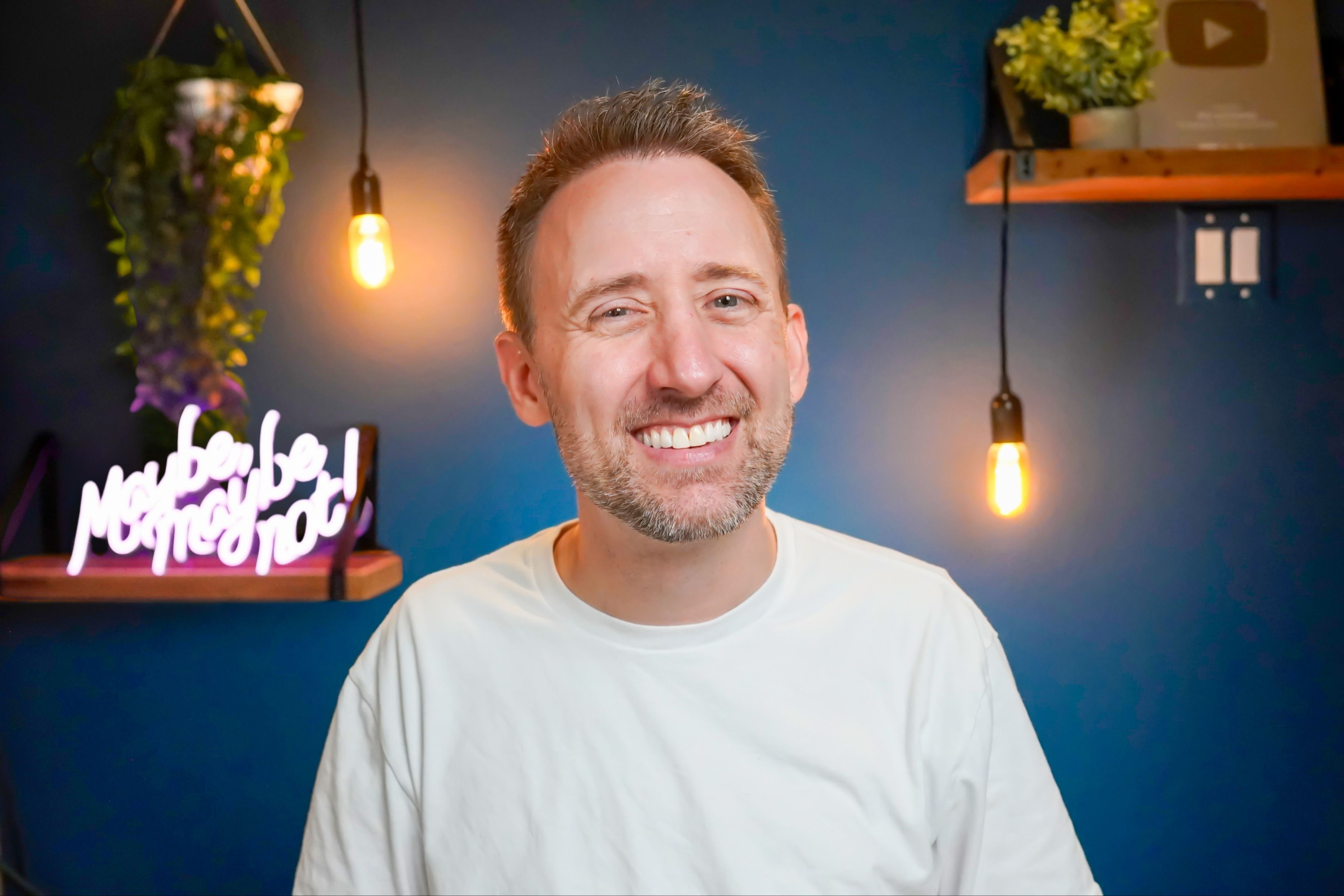
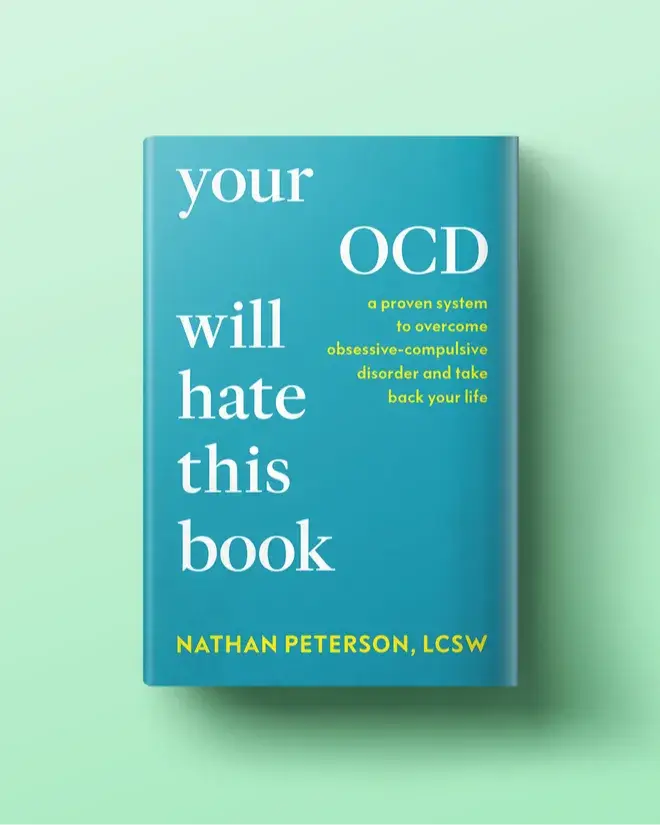
Nathan Peterson, LCSW — Licensed therapist specializing in OCD, anxiety, and related conditions. Nathan has helped thousands of people through evidence-based treatment and education.
LCSW Licensed Therapist | 10,000+ Course Students | 24M+ YouTube Views | Penguin Random House Author
 |
Want ERP for your specific theme?Master Your OCD covers all five of these themes plus every other OCD subtype — with step-by-step exposure guides for each one.
|
Author