Stop Overthinking Starting Today: Practical Tools That Actually Work
Feb 25, 2026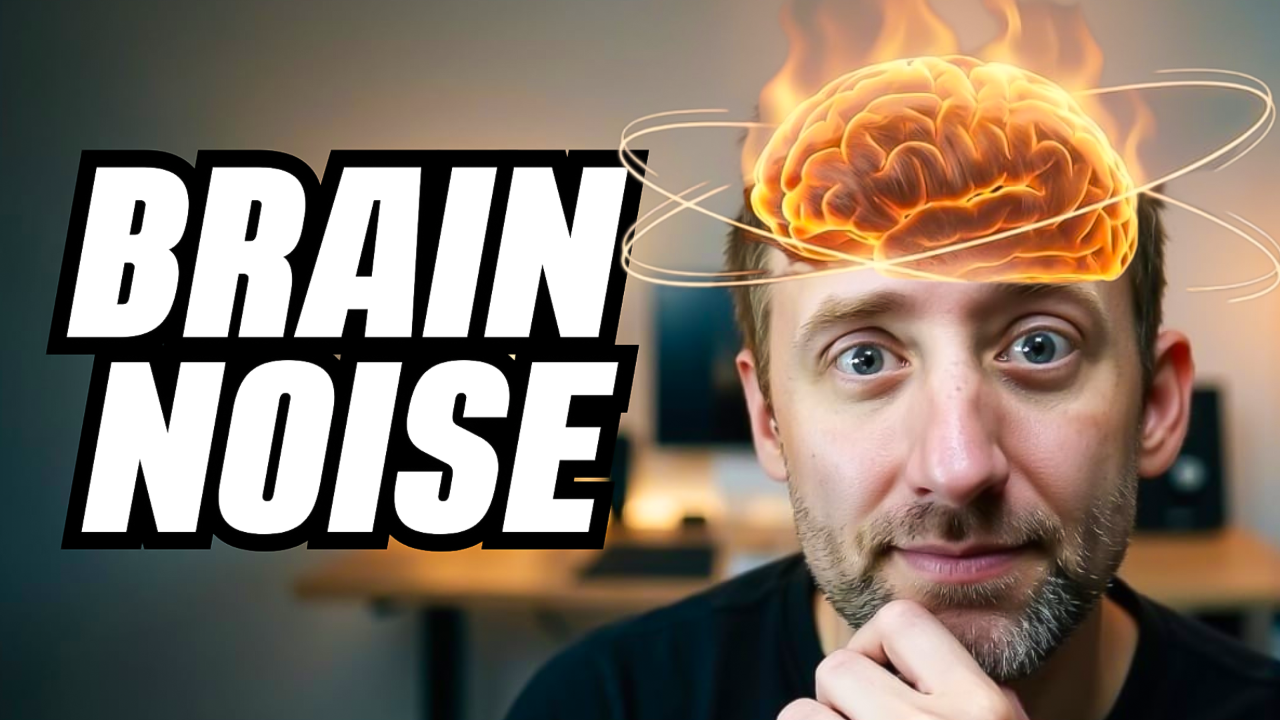
Your brain thinks rumination is helping, but research shows it makes anxiety worse. Learn practical pattern interruption tools, the 5-4-3-2-1 sensory exercise, and why sometimes doing nothing is the most powerful response.
Why Your Brain Won't Stop Thinking
When you're stuck in an overthinking loop, your brain has a default network.
It's basically on autopilot.
It just thinks. And thinks. And looks for problems.
- What can go wrong?
- How can I prepare?
- What did I do wrong yesterday?
- What might happen tomorrow?
Your brain thinks it's helping.
Going over the same things over and over—predicting, reviewing, analyzing, realizing it was wrong, doing it all over again.
It thinks it's productive:
"If I just think about this enough, I'll figure it out. I'll solve it. I'll be prepared."
But Here's the Problem
The research is pretty clear:
Rumination does not solve problems.
It actually makes anxiety and depression worse.
It keeps you stuck.
So what do you do?
The Goal Isn't to Stop Thinking
A lot of people watch videos like this and think: "Okay, so my goal is to stop thinking."
No. You're going to keep thinking.
That's okay.
But we're going to make it more meaningful.
We're going to interrupt the pattern. Retrain your brain. Change your relationship with thoughts.
Here are the practical, everyday tools you can start using today.
Tool #1: Pattern Interruption
The idea is simple: catch yourself in overthinking before it catches you.
But if you don't know you're overthinking, how can you interrupt it?
If you're on autopilot, you're just going, going, going.
How to Find Your Pattern
Pay attention.
Every time you catch yourself ruminating or overthinking, write it down:
- 10:00 a.m.
- Noon
- 5:00 p.m.
- Right in the morning
- Right at night
- Every time in my car
Find the pattern.
Because your brain is going to follow that pattern.
And once you know it, you can be prepared.
Prepare Your Response
When that thought comes up, you're ready:
- "That's not my thing."
- "You can keep bringing these thoughts my way, but I'm going to keep driving."
- "I'm still going to live life."
- "I'm still going to do all the things I want to do."
We're not saying "Don't think about it. Don't think about it."
But a lot of times when you notice: "I'm about to get in the car—I always ruminate here"—you're actually less likely to ruminate.
Because you caught it before it caught you.
Welcome the Thoughts If They Come
Everyone has different ways of responding:
- "Hey, man. Thanks for being here. I love this thought."
- "Awesome. Sweet."
- "You're welcome to be here, but I'm going to be aware before you catch me."
Tool #2: Mindful Breathing (But Not How You Think)
I know everyone talks about breathing.
"You just gotta do this. Breathe in for four counts. Breathe out. Do the box breathing. Blow out the candles."
Okay, it works.
But we're not doing it to get the thoughts away.
Why Breathing Works
Breathing brings you back to the moment right now.
Because if you're breathing, it's happening right now.
Rumination and overthinking happen in the future (trying to prepare for what might happen) or the past (replaying what did happen).
Box Breathing Technique
- Breathe in for 4 counts
- Hold for 4 counts
- Breathe out for 4 counts
- Hold for 4 counts
- Repeat a few times
Think of a box. You're giving your brain something concrete to focus on.
Thoughts can still be there while you're breathing.
That's fine.
Tool #3: The 5-4-3-2-1 Sensory Exercise
You catch yourself spiraling.
About to get in the car. About to lie down at night. Whatever your pattern is.
Stop and do this:
5 Things You Can See
Find five things that are a specific color.
"As I'm driving down the road, let me find five things that are yellow."
- Look at that yellow sign
- Yellow bird (do you ever see yellow birds?)
- Traffic light
4 Things You Can Touch
Things in your car you've never touched before.
What does it feel like? How can you describe it?
- Leather on the wheel
- Little notches
- Texture of the dashboard
You're not trying to figure it out. You're just experiencing it.
3 Things You Can Hear
Listen to music. Notice just the drums. Or just the bass.
Traffic outside. Birds. The hum of the engine.
2 Things You Can Smell
Air freshener. Coffee. Anything.
1 Thing You Can Taste
Put a Skittle in your mouth and let it melt.
Just notice what it feels like.
Why This Works
Again, we're not doing this to get thoughts to go away.
We're interrupting the pattern.
We're saying: "Look what I'm going to do. And it's happening right here in this moment."
Tool #4: Movement
Do something physical.
Doesn't have to be a big deal. Just deliberate actions.
Examples:
- Jump up and down for 60 seconds
- Do jumping jacks until you can't anymore
- One-minute tidy-up in areas where you ruminate most
I've seen people write down: "Every night at 7:00 p.m. right in the car—even if I'm not going to ruminate, I have it ready to go. I'm just going to do this when I get in the car for 60 seconds."
The One-Minute Tidy
Set a timer for 1 minute and organize:
- Stack the dishes
- Straighten the couch
- Clear off your desk
- Close all the browser tabs
This is really saying: "I can still have thoughts AND I can still function in life."
Tool #5: Brain Dump Journaling
But not in the way you might think.
This isn't about processing your feelings.
It's not: "I'm really upset. This is horrible. My life is..."
It's a brain dump.
How to Do It
When thoughts are swirling, grab a piece of paper.
Write everything down:
- No filter
- No judgment
- Not trying to make sense of it
Just get it out of your head onto paper.
Why This Works
It externalizes the thoughts.
They're not trapped in your head anymore.
They're here on paper.
This creates distance.
You're essentially saying: "Yeah, the thoughts are here. Okay. Moving on."
Tool #6: Set Boundaries With Your Phone
Mindless scrolling fuels overthinking.
Your brain needs breaks.
Create No-Phone Zones
- The first hour after you wake up
- The last hour before bed
- During meals
- In specific rooms (bedroom, bathroom)
Give your brain a chance to be present instead of consuming content that triggers rumination.
The Wildcard: Do Nothing
Here's something interesting.
You could also do nothing.
That's crazy, right?
I just went through this whole article giving you tools.
And now I'm telling you to do nothing.
Why This Works
You're teaching your brain:
"I don't have to do a darn thing every time you show up."
Which can be pretty powerful.
Your brain learns: "This person just doesn't care. They're not trying to figure it out. They're not doing breathing exercises. What's happening?"
Some people do a mixture of both—using tools sometimes, doing nothing other times.
What These Tools Are Really Preparing You For
All of these tools prepare you for something bigger:
Exposure and Response Prevention (ERP).
Learning to respond differently to thoughts.
Allowing them to stay.
Not trying to get them to go away.
Example:
Every night at 7:00 p.m., you get worried about a specific thing.
Instead of avoiding it, you're going to engage with it on purpose:
"I don't care. This is amazing. I love this."
Your brain learns something pretty amazing:
"You don't care? Well, then I need to not care."
The Most Important Rule
There's not really a right or wrong tool.
The thing you need to be aware of:
You're not doing this to get the thoughts to go away.
(Probably the fourth time I've said that.)
You're doing it to live life.
But catch that automatic thinking—because that's where a lot of people get stuck.
They don't know when it's happening, so they can't do anything about it.
Practice Self-Compassion
Overthinking is a habit.
It's also forced on you at times.
You're going to catch yourself spiraling.
That's normal.
Try one of these tools. Or don't.
Either way, you're learning.
Be kind to yourself in the process.
Nathan Peterson, LCSW
OCD and Anxiety Specialist
Creator of "OCD and Anxiety" YouTube Channel
Developer of Master Your OCD Online Course
Author