How to stop caring what people think
Nov 08, 2023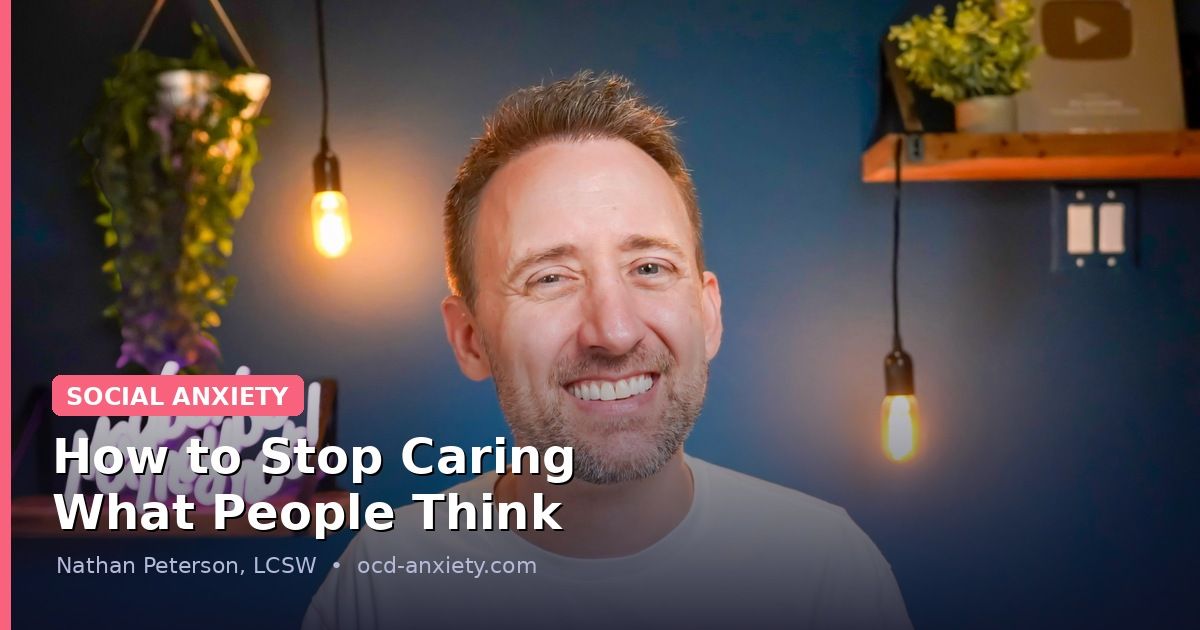
Here's something I'll admit openly: I've spent a lot of my life caring what people think. I'm observant, I read facial expressions, I pick up on tone — and for a long time, I used all of that information to manage how I was being perceived.
It's exhausting. And it keeps you small.
The goal isn't to stop caring about people. It's to stop letting the fear of their judgment run your decisions. Those are very different things — and the difference is what this post is about.
WHY IT HAPPENS
Why You Care So Much What People Think
First — this isn't a character flaw. Caring about social approval is hardwired. Humans are social animals, and for most of our evolutionary history, being rejected from the group was genuinely dangerous. Your brain treats social judgment as a threat because, for a long time, it was.
The problem is that the same threat detection system that kept our ancestors safe is now firing when your coworker gives you a weird look or you post something on Instagram and it gets fewer likes than expected.
The real issue: It's not that you care what people think. It's that you're treating their judgment as information about your safety or worth — and making decisions based on that.
When it crosses into social anxiety:
- ✓ Avoiding situations where you might be judged or evaluated
- ✓ Over-analyzing interactions after they happen
- ✓ Holding back opinions or your true personality to avoid criticism
- ✓ Physical symptoms — heart racing, voice shaking — in social situations
- ✓ Assuming neutral or ambiguous reactions are negative
The Two-Edged Sword No One Talks About
The same trait that makes you hyperaware of other people's opinions is often the same trait that makes you perceptive, empathetic, and good at reading a room. Caring isn't the enemy.
The trap is when that awareness flips inward — when instead of using it to connect with people, you're using it to monitor how you're being perceived and adjust yourself accordingly.
You can care about a person deeply while simultaneously not needing their approval to take action. Those two things can coexist. In fact, that's what genuine confidence actually looks like.
THE CORE PROBLEM
You're Making Assumptions — And Acting On Them
Most fear of judgment isn't based on what people actually think. It's based on what you imagine they think. You notice a facial expression. You interpret it. You build a story. You act on the story as though it were fact.
The cognitive distortions underneath:
- ✓ Mind reading — assuming you know what someone thinks without evidence
- ✓ The spotlight effect — believing people are paying far more attention to you than they actually are
- ✓ Catastrophizing — treating social rejection as though it would be unbearable
- ✓ Personalization — assuming someone's neutral behavior is about you
Ask yourself: "Is there concrete evidence to support this thought? Or am I filling in a blank with my worst fear?"
6 Ways to Stop Caring What People Think
These aren't affirmations. They're behavioral strategies — things you actually do differently that change how much you're affected by judgment over time.
Separate caring about people from needing their approval
You can be warm and genuinely interested in others while not requiring their validation before you act. Ask yourself: "Am I doing this because I want to, or because I'm afraid of what they'll think if I don't?"
Challenge the thought — don't just dismiss it
"Everyone will think my idea is stupid." Okay — is there actual evidence for that? Have your ideas always been judged negatively? Challenging the thought means genuinely testing it, not just saying "I shouldn't think this."
Act like it doesn't matter — before it feels that way
Confidence doesn't come first and then action. It works the other way around. Say the thing. Post the content. Share the opinion. The feeling of not caring comes from repeatedly proving to yourself that you survive judgment just fine.
Make mistakes on purpose
Send a text with a typo and don't correct it. Change your mind at the register. Each small deliberate "mistake" trains your nervous system to tolerate the discomfort of not controlling how you're perceived — and proves that nothing catastrophic happens.
Accept all possibilities
Someone might like you. Someone might not. You can't control it either way. The shift from "I need them to think well of me" to "I accept that I can't know or control what they think" is the same skill ERP builds for OCD and anxiety.
Focus on your authentic self, not a filtered version
Every time you present a curated, approval-seeking version of yourself, you reinforce the belief that the real you isn't acceptable. Showing up authentically — even when it's uncomfortable — is both an exposure and a statement to your brain that you're worth showing up as.
THE OCD CONNECTION
When Fear of Judgment Becomes OCD
For some people, fear of judgment isn't just social anxiety — it's OCD. It can show up as moral scrupulosity, relationship OCD, or real event OCD — constantly replaying interactions wondering if you came across badly.
The difference between social anxiety and OCD in this context is often the compulsions: mentally reviewing conversations, seeking reassurance, Googling to check if your behavior was normal, confessing to friends.
If the reassurance never fully works — if you get the "you were fine" and still feel like something is off — that's the OCD pattern. ERP is the treatment for both social anxiety and the OCD version of fear of judgment.
THE REAL GOAL
What "Not Caring" Actually Looks Like
Nobody truly doesn't care what people think. The goal isn't indifference. It's this:
- ✓ Being able to act in line with your values even when you don't know how it will be received
- ✓ Letting the discomfort of potential judgment exist without it stopping you
- ✓ Noticing the fear, acknowledging it, and moving forward anyway
- ✓ Not requiring certainty about what others think before you're allowed to be yourself
Not fearlessness. Just the ability to carry the fear without being controlled by it. That's a skill you can build — through repeated exposure to the thing you're avoiding.
You Already Survive Judgment Every Day
The fear of judgment feels bigger than it is. Most of the time, people are far more focused on themselves than on evaluating you. And the times they do judge — most of it doesn't matter the way your anxiety says it will.
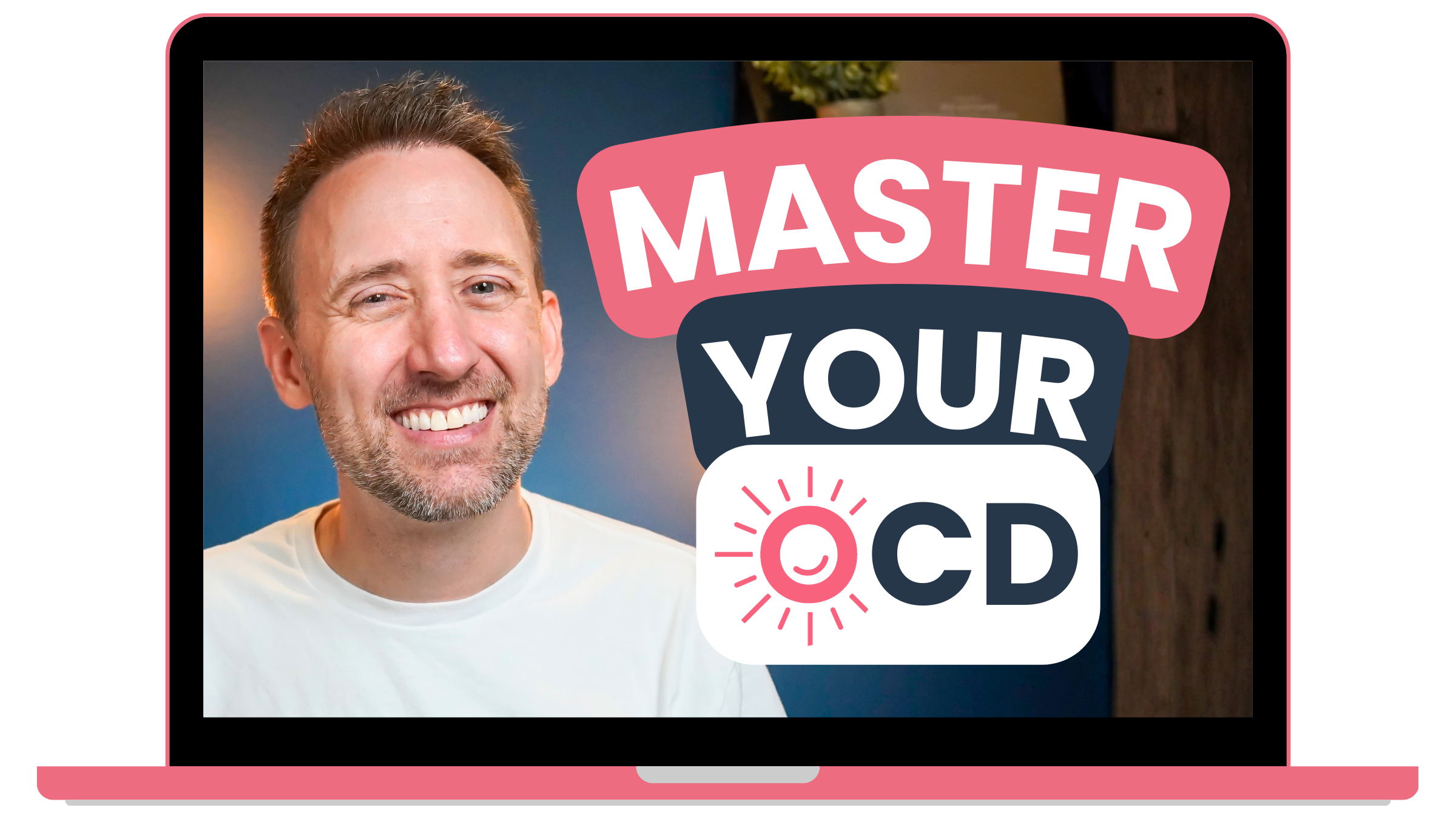
If the fear of judgment is connected to OCD — if it comes with compulsive reassurance-seeking, mental reviewing, or confessing — the Master Your OCD course covers this directly, including how to use ERP to break the cycle.

Nathan Peterson, LCSW — Licensed therapist specializing in OCD, anxiety, and related conditions. Nathan has helped thousands of people through evidence-based treatment and education.
LCSW Licensed Therapist | 10,000+ Course Students | 24M+ YouTube Views | Penguin Random House Author
 |
Ready to stop letting judgment run your life?Master Your OCD teaches you the complete ERP system — including how to handle social anxiety, fear of judgment, and the OCD patterns underneath them.
|
Author