
Reasons To Check Out an OCD Workbook
Reading about OCD helps you understand it. Doing something about it is a different thing. A good OCD workbook gets you out of your head and onto paper, with steps you can start today.
 By Nathan Peterson, LCSW, OCD therapist
Manage OCD effectively
The treatment with the most research behind it for OCD is exposure and response prevention, or ERP. A workbook is useful because ERP is something you do, not something you read. A workbook helps you:
- Understand your triggers. Tracking sheets show you when OCD shows up, what it says, and what you do about it. Not so you can avoid the triggers, but so you know where to practice.
- Map your OCD. You list your triggers from easier to harder, so you have a place to start.
- Plan exposures. Step-by-step exercises where you face a trigger on purpose and skip the compulsion.
- Track progress. Writing it down shows you what's changing, even on days it doesn't feel like it.
- Build confidence. Each exposure you finish is proof you can sit with the anxiety and keep going.
What to look for in an OCD workbook
- Written by someone who treats OCD with ERP
- Tracking sheets and a trigger list, not only reading
- Exposure exercises where you skip the compulsion
- Help with mental compulsions, like reviewing and reassurance
- Works for any OCD theme, since the treatment is the same
What to skip
Some OCD workbooks lean on relaxation, positive thinking, or "challenging" your thoughts. Relaxation isn't bad, but using it to make the anxiety go away can turn into another ritual. And arguing with OCD usually starts a debate you can't win. A workbook built for OCD has you let the anxiety be there and skip the compulsion anyway.
I know, "let the anxiety be there" doesn't sound like much of a plan. That part is what makes it work.
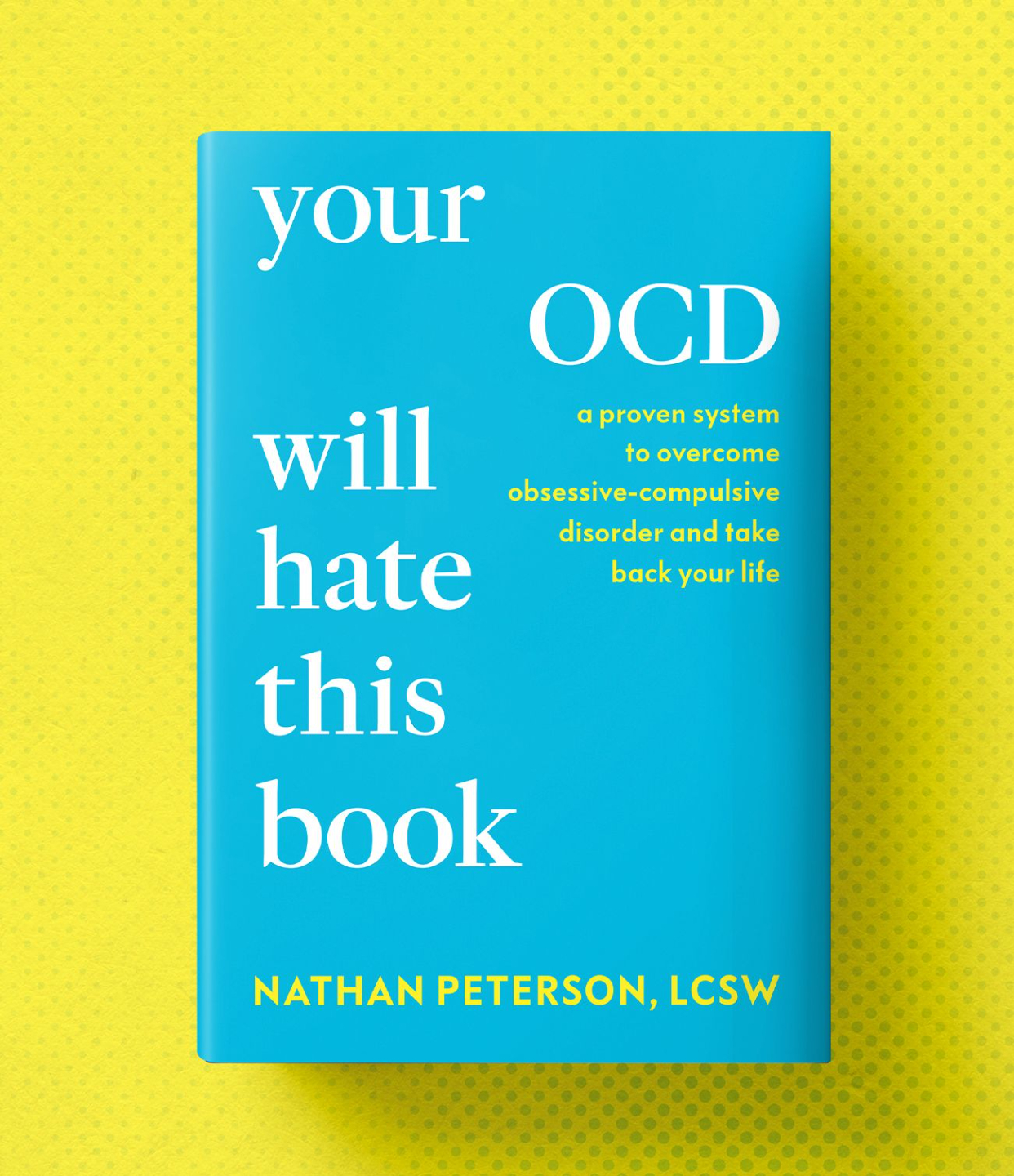
Your OCD Will Hate This Book
From session one to graduation, it walks you through the treatment for OCD in a way that's fun and easy to follow.
Get the bookCreate a support network
A workbook works better when you're not doing it alone. Some ways to build support around it:
- Tell one person. Let someone you trust know what you're working on, so they can cheer you on instead of reassuring you.
- Find a community. Talking with other people who have OCD takes some of the shame out of it.
- Add a therapist if you need one. An ERP therapist can help you build on what you're doing in the workbook. The International OCD Foundation has a directory at iocdf.org.
Tonight, write down the times OCD showed up today: what set it off, what it said, and what you did. That's page one.
If you want the whole plan laid out with worksheets for every step, that's what Master Your OCD is for.
Common questions about OCD workbooks
Can an OCD workbook replace therapy?
A good ERP-based workbook or program can be enough to make progress. It can also work alongside a therapist. If your OCD is severe or you're stuck, a therapist who does ERP is worth it.
What should an OCD workbook include?
Look for tracking sheets, a way to list your triggers from easier to harder, and exposure exercises where you skip the compulsion. If it's mostly relaxation or positive thinking, it's not built for OCD.
Is there a free OCD worksheet I can start with?
Yes. Master Your OCD has a free preview with lessons, and the free OCD test is a good first step to see where you are.